SOAR platform built into Elastic Security: No standalone tool to buy, integrate, or maintain
Elastic Workflows brings native SOAR capabilities directly into Elastic Security, an agentic security operations platform. Use playbooks to handle defined tasks with consistency and reliability, while AI agents step in to reason through investigations that fall outside your standard scripts.
Blog
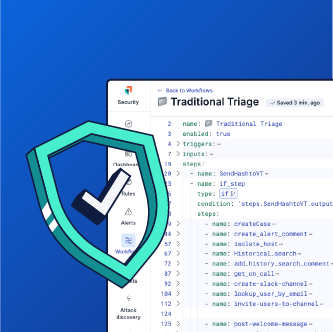
From the automation tax to native Workflows, read how Elastic Workflows makes standalone SOAR obsolete for security teams.
Documentation
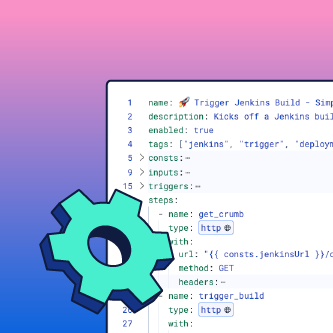
Get started with Elastic Workflows. Explore triggers, steps, connectors, and AI capabilities for security automation.
Guided Demo
One SOAR platform for alert triage and AI investigation
Playbooks handle enrichment, escalation, and response. AI agents reason when investigations go off-script. Both run where your security data lives.
Differentiators
The native SOAR platform
Standalone SOAR forces you to buy a separate tool, build brittle integrations, and move data between systems just to act on what your SIEM already knows. Elastic Workflows eliminates that tax. Automation runs natively inside Elastic Security with direct access to your alerts, cases, and security data.




You're in good company with Elastic's native SOAR
See how security teams automate where their security data lives.
Customer spotlight

"Using Workflows enabled our SOC to spend so much more time on the things that matter. On a daily basis, we ran through 500 alerts, spending 3 hours creating cases and enriching them manually. Using Workflows, this is all done automatically, saving up to 2.5 hours a day."
— SOC leader, European government agency
Customer spotlight

Visa built its first Elastic Workflow to cut alert triage on a high-stakes mainframe detection from 10–20 minutes to seconds, with a controlled, human-on-the-loop AI step.
AUTOMATE THE SOC
From alert to response in Elastic Security
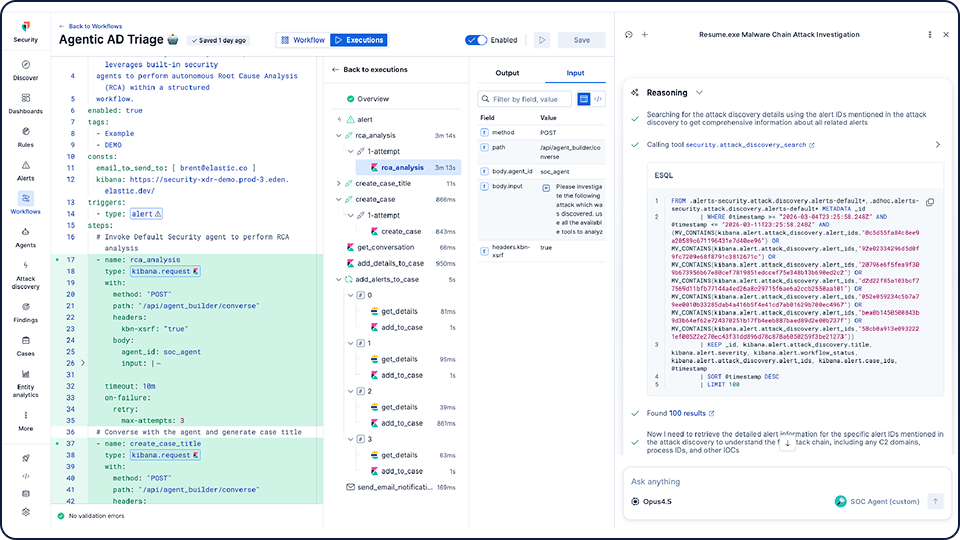
Automate the work your analysts repeat daily and investigate the unknown, all without leaving the platform.
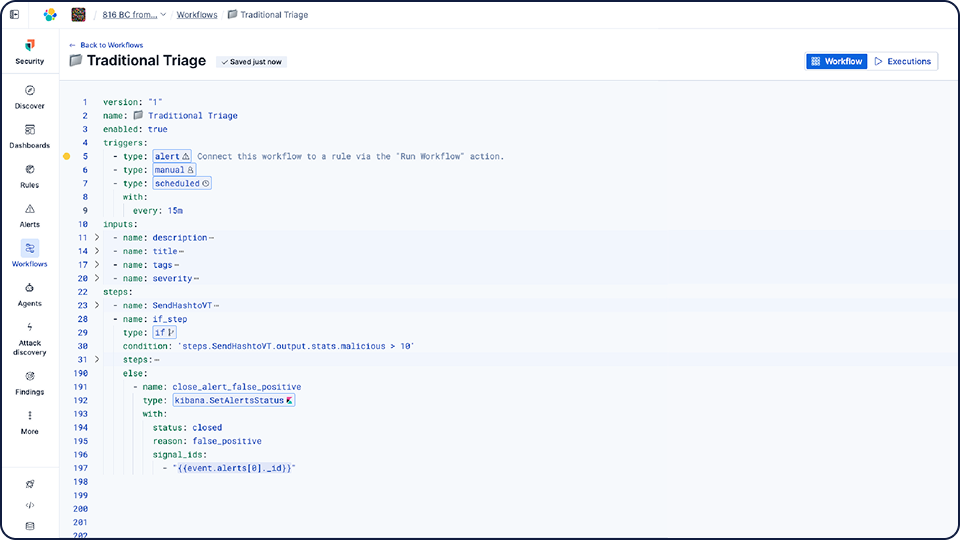
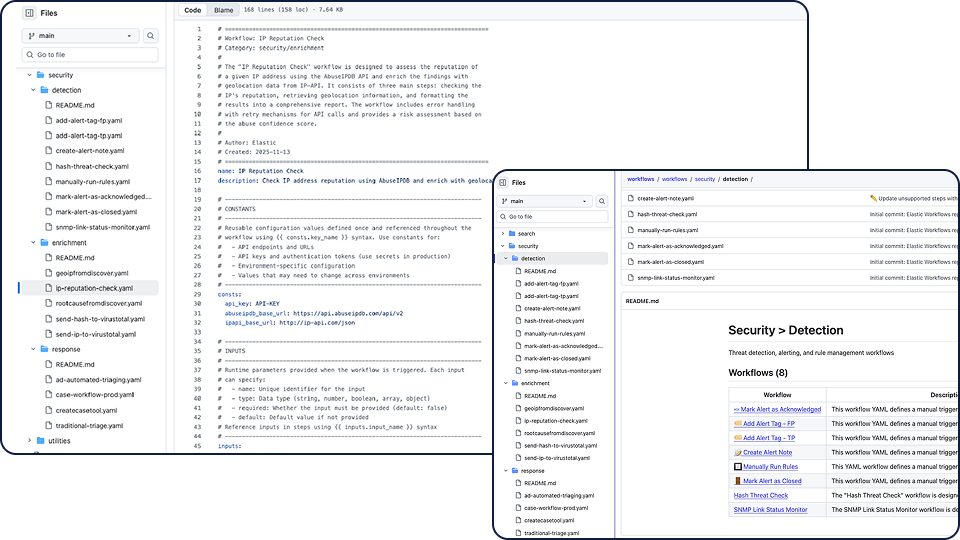
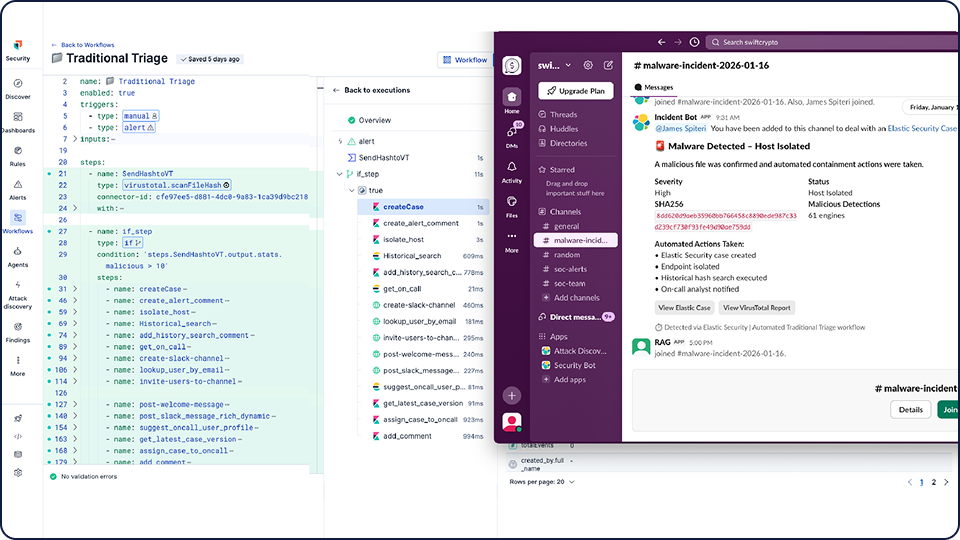
Built in vs. bolted on
Elastic Workflows delivers SOAR capabilities natively inside Elastic Security, an agentic security operations platform. By bringing automation to where your security data lives, Workflows eliminates the need for separate tools, brittle integrations, and unnecessary data movement.
 Elastic Workflows
Standalone SOAR solutions
Elastic Workflows
Standalone SOAR solutions
Getting started
Everything you need to start building intelligent Workflows
Find the tools, tutorials, and technical insights you need to launch your first Workflow and scale your automation.
Blog
From alert to AI investigation, follow a step-by-step guide to building security playbooks with Elastic Workflows.

Agent Builder
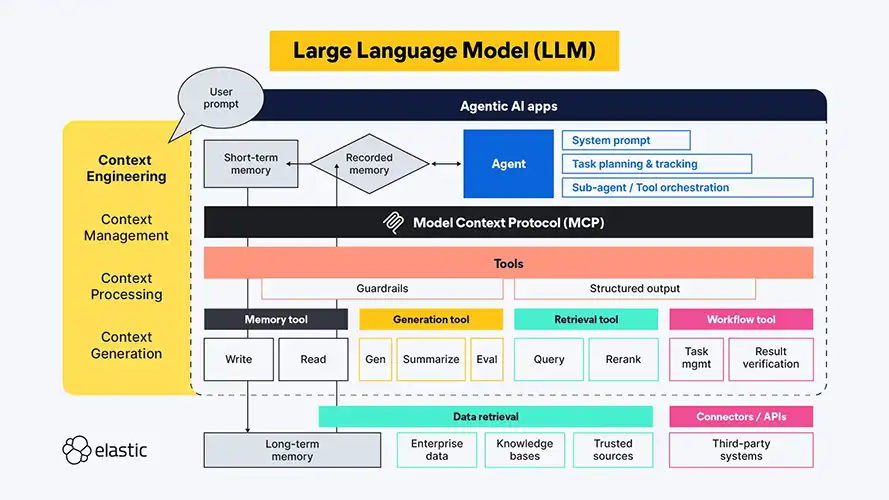
Learn how to use Agent Builder to create custom AI agents that think, interpret, and act directly with your environment.

Blog
See how Attack Discovery, Workflows, and Agent Builder detected, confirmed, and triaged an APT-level attack in under four minutes.
Frequently asked questions
What is Elastic Workflows?
What is Elastic Workflows?
Elastic Workflows is native security automation built directly into Elastic Security. It eliminates the need for a standalone SOAR platform by running automation where your security data already lives, with direct access to alerts, cases, and investigation data. No separate integrations required.
Do you need a SOAR platform if you already use Elastic Security?
Do you need a SOAR platform if you already use Elastic Security?
No. Elastic Workflows includes the automation capabilities a standalone SOAR provides, natively within Elastic Security. Alert triage, enrichment, case management, and response actions all run where your security data lives. Teams already using Elastic Security can start building Workflows without additional tooling.
Is Elastic Workflows a full replacement for a SOAR platform?
Is Elastic Workflows a full replacement for a SOAR platform?
For security operations running inside Elastic Security, yes. Workflows automates the full lifecycle: detection, triage, enrichment, escalation, and response. Teams that rely on a separate SOAR for cross-platform orchestration across non-Elastic systems can run both, with automation that touches Elastic data moving natively into Workflows.
Can Elastic Workflows work with my existing SOAR platform?
Can Elastic Workflows work with my existing SOAR platform?
Yes. Elastic Workflows is designed to coexist with existing SOAR investments. Automation that touches Elastic data moves natively into Workflows. Cross-platform orchestration across non-Elastic systems can remain in your existing SOAR.
Why are organizations moving away from standalone SOAR platforms?
Why are organizations moving away from standalone SOAR platforms?
Standalone SOAR platforms require a separate purchase, dedicated engineering to build and maintain integrations, and constant data movement between systems. When alert volume rises or investigations go off-script, those integrations break. Organizations are consolidating automation into their SIEM to reduce complexity and close the gap between detection and response.
What is the "automation tax" Elastic Workflows eliminates?
What is the "automation tax" Elastic Workflows eliminates?
The automation tax is the hidden cost of running a separate SOAR alongside your SIEM: extra vendor contracts, brittle integrations, and data that has to be pulled out of your SIEM before automation can act on it. Each step adds time an adversary is already using. Elastic Workflows eliminates that overhead by running natively inside Elastic Security.
What types of security operations can Elastic Workflows automate?
What types of security operations can Elastic Workflows automate?
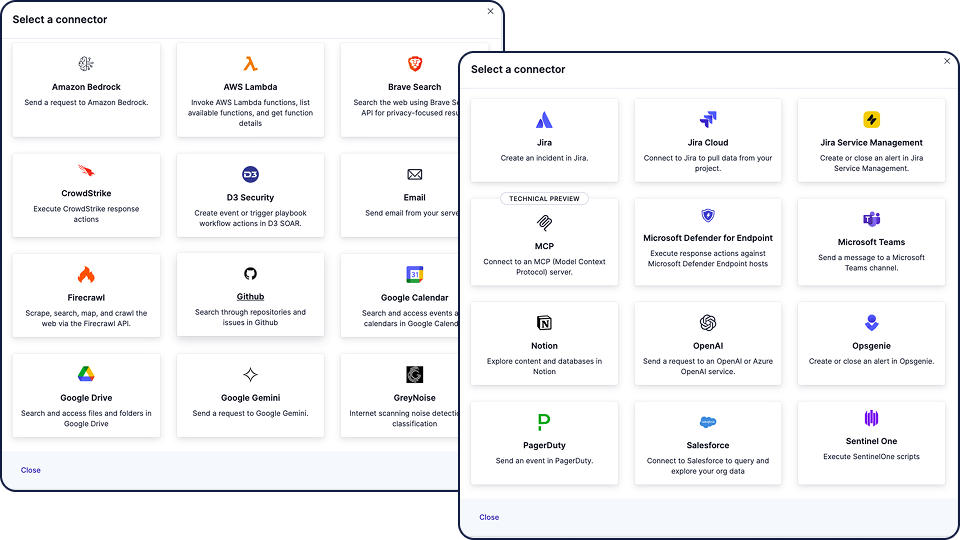
Workflows handles the full lifecycle: proactive threat intel monitoring and IOC sweeps ahead of any alert; alert triage and enrichment when alerts fire; and case management, escalation, and response actions including host isolation once a threat is confirmed. AI agents can be invoked as steps within a Workflow, gathering context, reasoning over findings, and presenting conclusions for analyst approval before action executes. Connects to Slack, Jira, VirusTotal, PagerDuty, AWS, and any REST API.
How long does it take to deploy Elastic Workflows?
How long does it take to deploy Elastic Workflows?
Teams already using Elastic Security can start immediately. No external systems to connect, no implementation project. Workflows uses YAML-based authoring, similar to writing detection rules, and prebuilt security templates are available on GitHub. Most teams run their first Workflow on day one.
Is Elastic Workflows available now and what does it cost?
Is Elastic Workflows available now and what does it cost?
Elastic Workflows is generally available in version 9.4. It is available with an Enterprise license on Elastic Cloud Hosted and self-managed deployments, and with the Complete tier on Elastic Cloud Serverless for Security. Pricing is execution-based with a monthly baseline allocation included. See full pricing details.