Customer Zero
Elastic’s InfoSec team runs its own security operations on Elastic. These posts cover what the team built, what it cost, and where it went wrong.

Elastic’s 2022 Global Threat Report: A roadmap for navigating today’s growing threatscape
Threat intelligence resources like the 2022 Elastic Global Threat Report are critical to helping teams evaluate their organizational visibility, capabilities, and expertise in identifying and preventing cybersecurity threats.

Time-to-Patch Metrics: A Survival Analysis Approach Using Qualys and Elastic
In this article, we describe how we applied survival analysis to vulnerability management (VM) data from Qualys VMDR, using the Elastic Stack.

Automating detection tuning requests with Kibana cases
Learn how to automate detection rule tuning requests in Elastic Security. This guide shows how to add custom fields to Cases, create a rule to detect tuning needs, and use a webhook to create a frictionless feedback loop between analysts and detection engineers.

How Elastic Infosec Optimizes Defend for Cost and Performance
This article details the internal Elastic Infosec team's process to optimize our endpoint data collection using Event Filtering and Advanced Policy Settings in Elastic Defend.

Monitoring Claude Code/Cowork at scale with OTel in Elastic
How Elastic's InfoSec team built a monitoring pipeline for Claude Code and Claude Cowork using their native OTel export capabilities and Elastic's OTel ingestion infrastructure.

From vulnerability report to CVE draft in minutes: how Elastic automated security advisories with AI
How Elastic's security team built an AI agent with RAG against MITRE's CWE and CAPEC catalogues to draft CVE advisories from raw vulnerability reports, including the full prompt and crawler configs.

Inside Elastic InfoSec's agentic SOC: cutting alert triage from 30 minutes to under 3
Elastic's InfoSec team built AI agents on Elastic Workflows that investigate every alert and assemble the case before an analyst ever opens it.

How Elasticsearch ES|QL COMPLETION turns noisy curl and wget rules into high-fidelity cloud security alerts
Elastic InfoSec tested this detection rule pattern on their own cloud fleet, filtering noisy curl and wget events with deterministic logic and LLM triage so only genuine threats reach an analyst.

Inside Elastic InfoSec's agentic SOC: When to inline your agent's skills for a 5× cost reduction
We tested two agentic SOC architectures in parallel across 36,822 real Agent Builder conversations. One won by 5.7x: a specialized workflow triaging alerts for $0.69 each, against $3.42 for a single agent juggling 14 Skills. The data and the decision framework are both below.

Inside Elastic InfoSec's agentic SOC: How we cut AI agent LLM calls by 60%
We run fourteen AI agents that triage Elastic InfoSec alerts. They were taking 19 LLM calls to do work that needed 8. Here's the five-step optimization loop we run across the fleet, plus the prompt template you can use with any AI assistant.

Agents vs. agents: how we triage HackerOne reports for $2 each, 85% as well as a human
LLMs made it cheap to flood bug bounty programs with submissions. Here's how Elastic built an AI triage agent that matches human decisions 85% of the time, including the architecture, threat model and calibration against 3,300 real reports

The security signal log tailing can't see: tracking npm cooldown removals with Elastic Agent
A 40-line CEL integration snapshots .npmrc files every 6 hours to catch cooldown removals. This post walks through the three ways we broke filestream before landing on snapshot semantics.
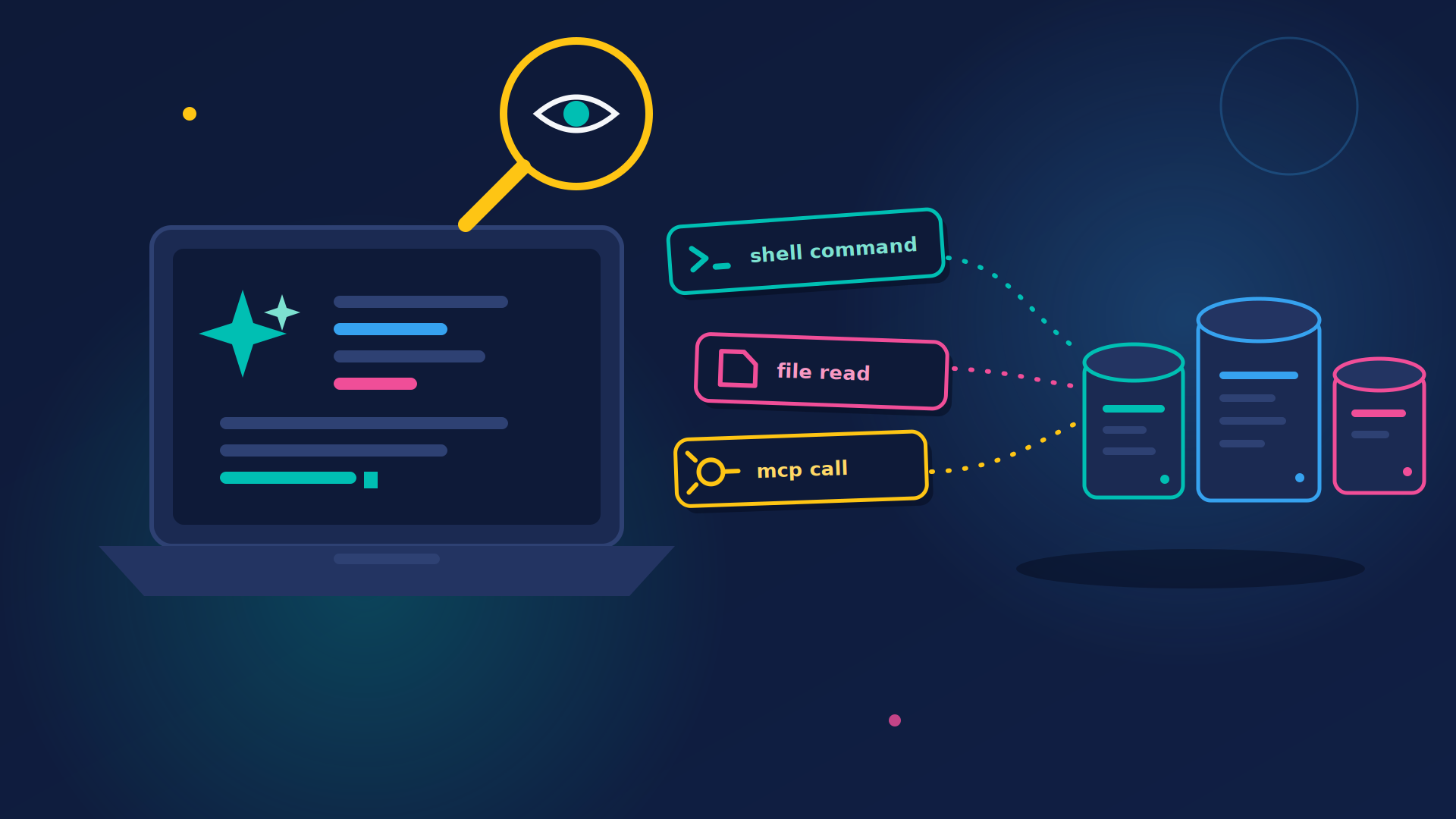
13 million tool calls: auditing every AI coding agent action with Elastic Agent
Cursor hooks and Elastic Agent capture every tool call, shell command, file read and MCP request as structured events you can hunt with ES|QL.
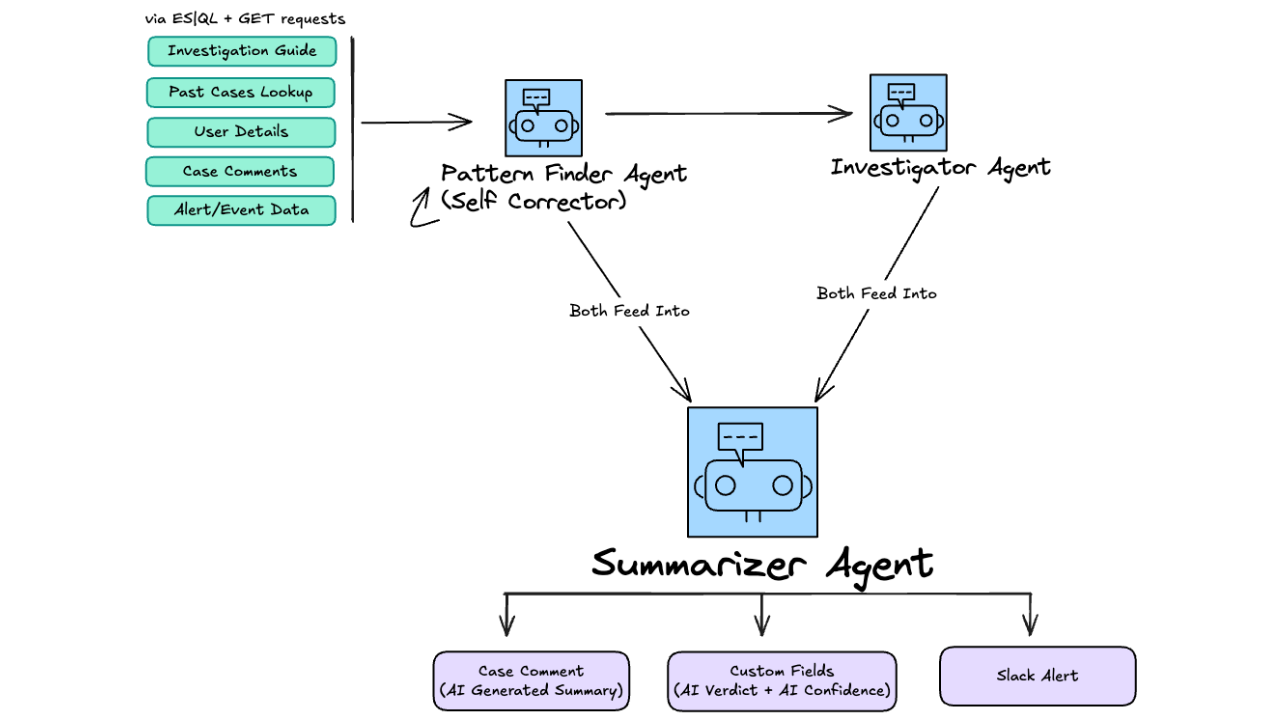
Inside Elastic's agentic SOC: How we took AI alert triage from 60% to 92% accuracy
Elastic's InfoSec team runs three agents that read the detection rule's investigation guide and the closure reasons on 30 days of past cases. Analysts now clear most alerts with a single click in Slack.
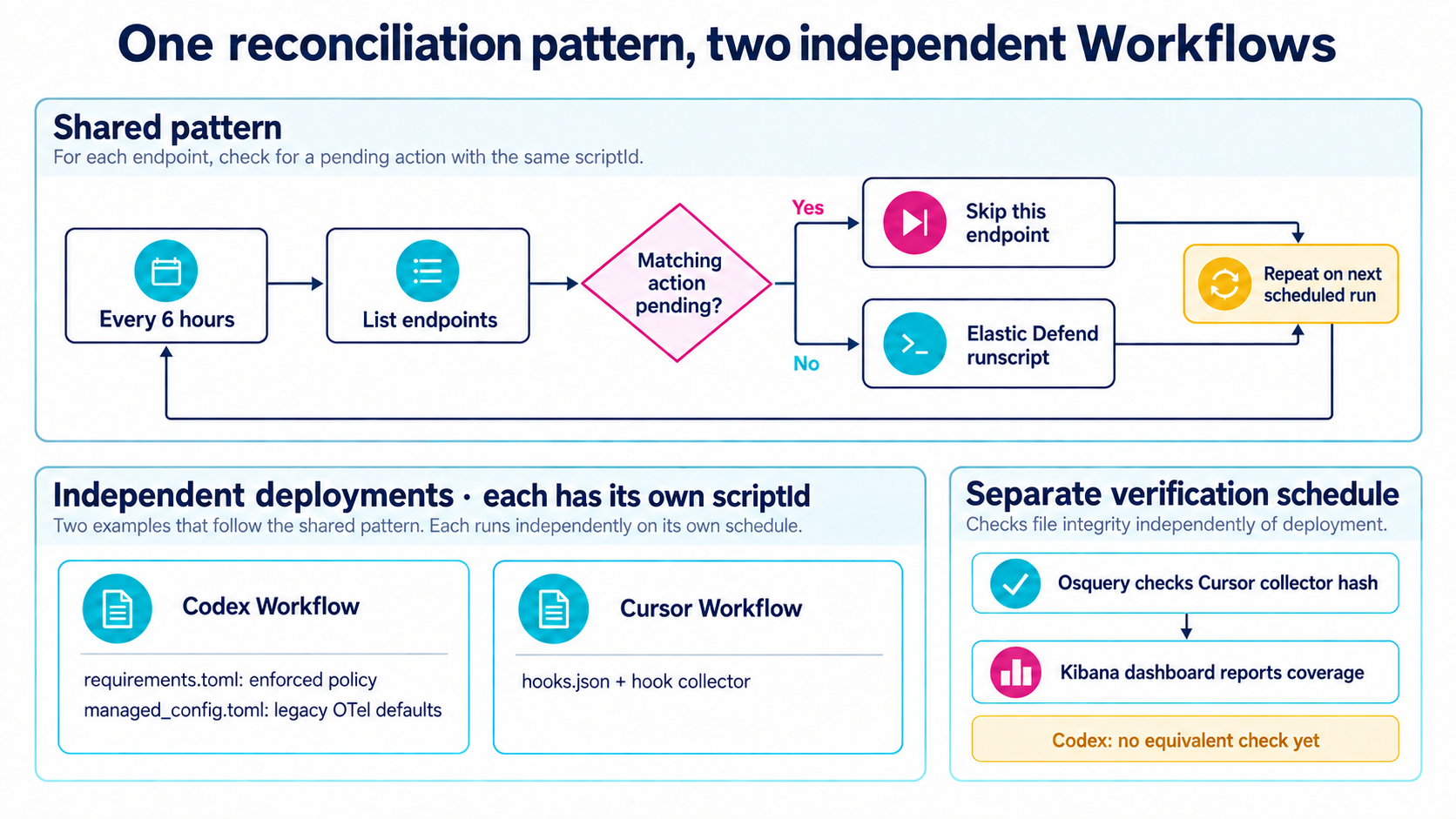
No MDM for Linux? A 68-line Elastic workflow keeps every endpoint's config current
Elastic InfoSec runs Linux endpoint management through Elastic Defend with a scheduled workflow that gets Cursor and Codex config onto new laptops without piling up duplicate actions on offline hosts, and it works for other config too.