ELASTIC NIGHTSHIFT AI SRE
Your always-on AI SRE coworker
Detect and investigate across your entire stack with full context. Elastic® nightshift AI SRE learns from every incident, finds what alerts miss, and delivers evidence-backed answers you can trust.

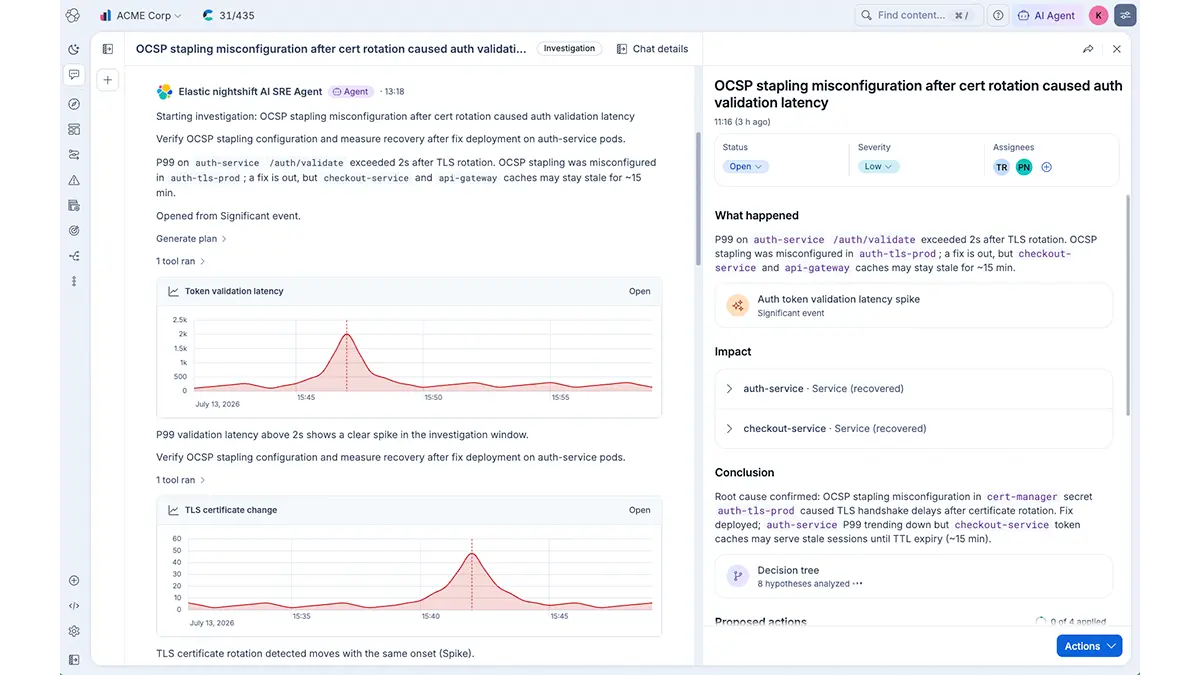
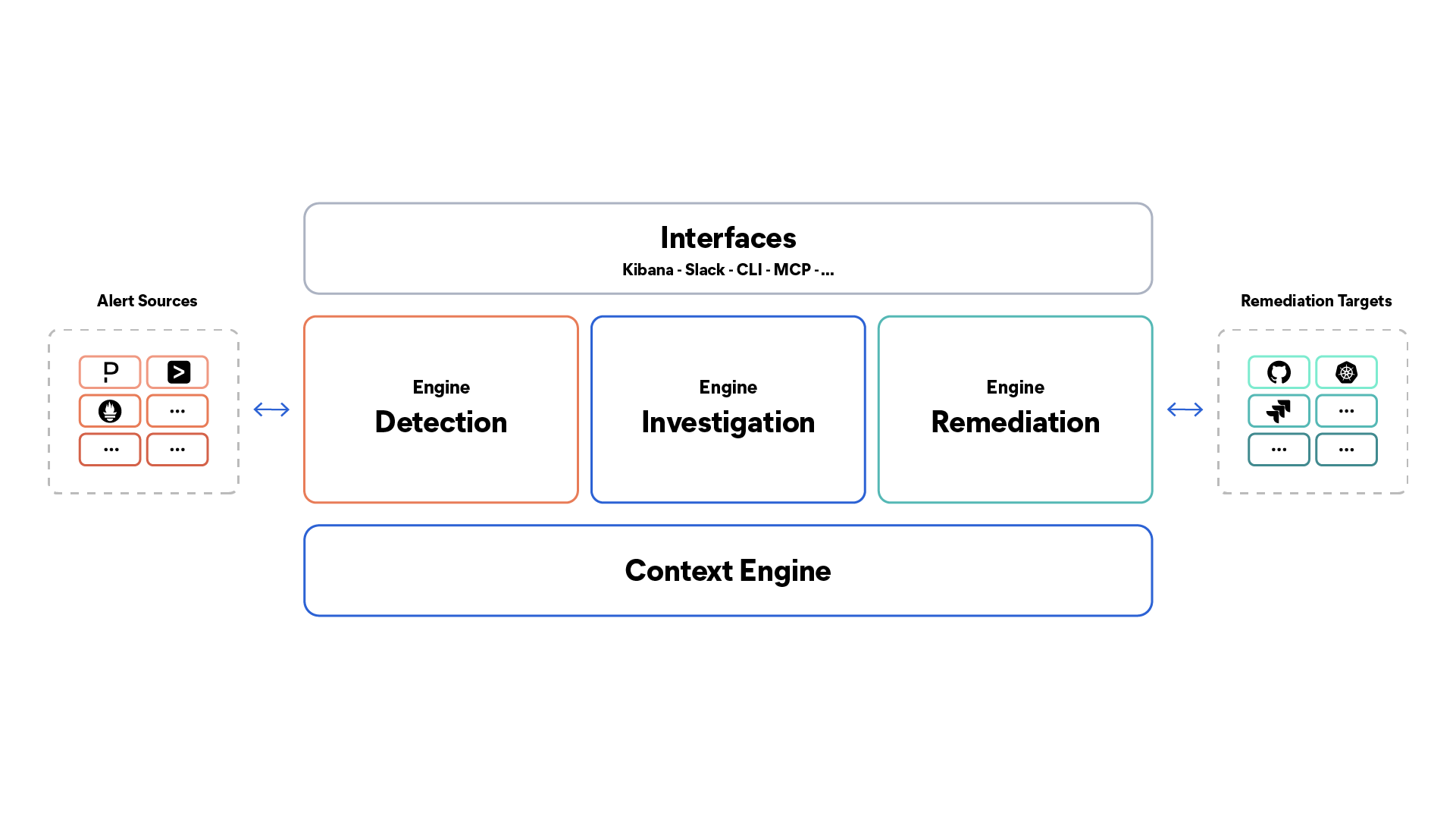
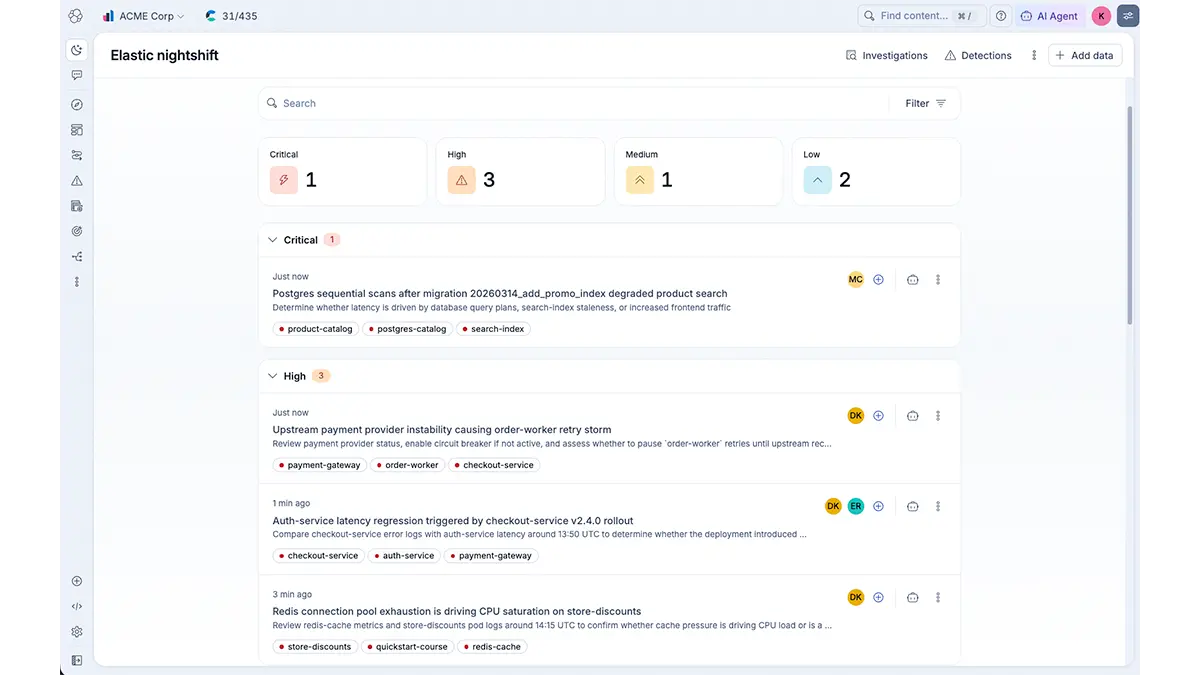
Elastic® nightshift AI SRE is a site reliability engineering (SRE) AI agent built into the Elastic Observability platform. It investigates the way an engineer would, testing multiple hypotheses in parallel and delivering closed-loop remediation with transparency and configurable oversight that keeps SREs in control.
Built for the incidents that break all your assumptions
Production environments have outrun the tools built to monitor them, generating more telemetry than any team can reason about manually. Agentic development compounds the complexity — code writes code, behavior is unpredictable, and failures don't generate clean error codes or even fire alerts.
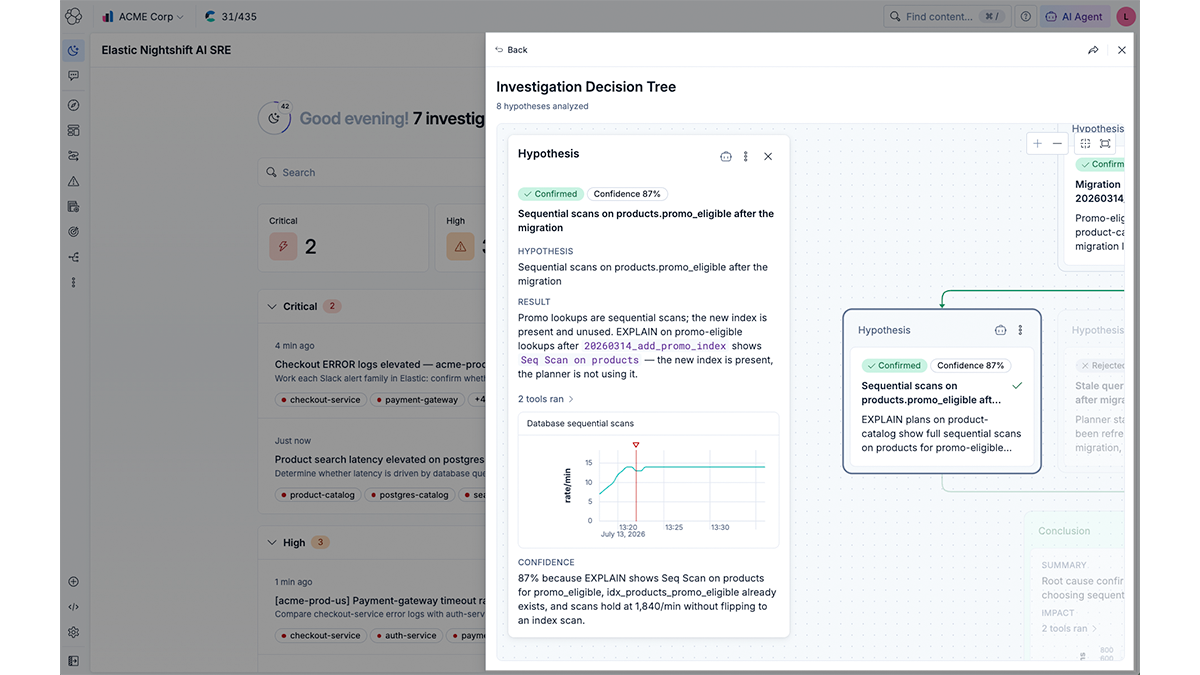
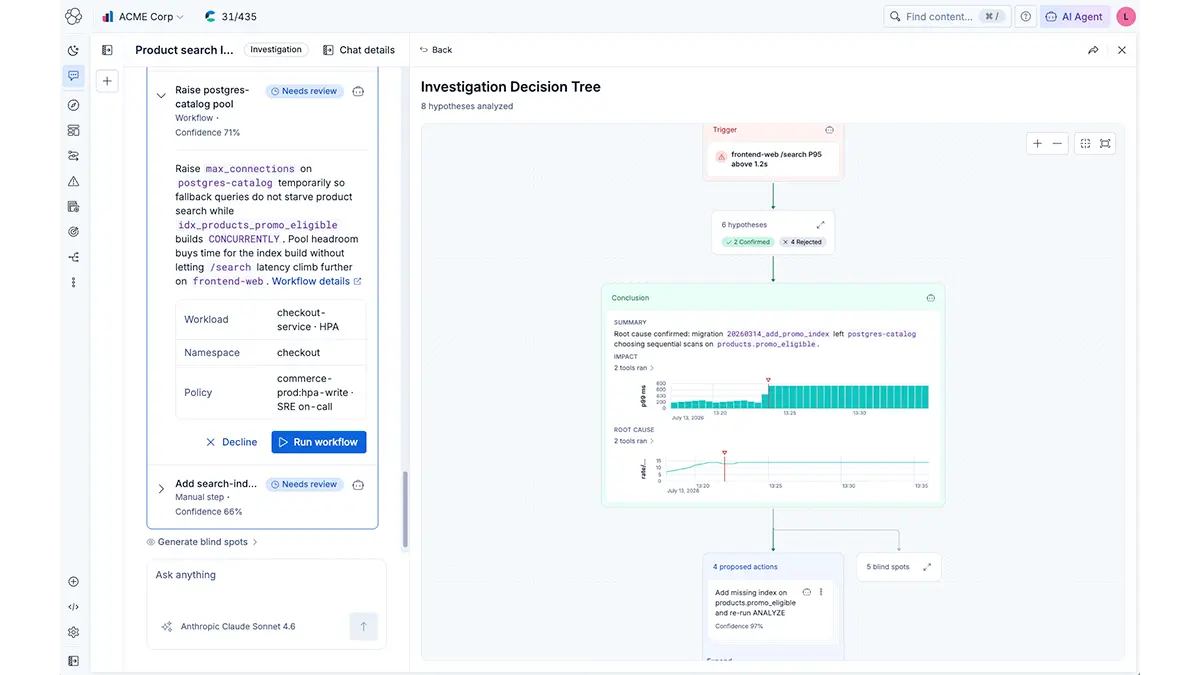
Investigates like an SRE and shows you how it got there
Elastic nightshift AI SRE learns from every incident. By testing multiple hypotheses and converging on the most likely root cause, it delivers evidence-backed remediation you can trust, with configurable autonomy and reasoning made transparent.
Complete context — not just what you can afford to keep
Context through access to all telemetry data is the limiting factor for investigation quality. Data is often dropped to control costs, and information is fragmented across telemetry, code repos, runbooks, past incidents, Slack, and more. Elastic gives agents complete context, without the big bill.
Finds unknown issues before they find you
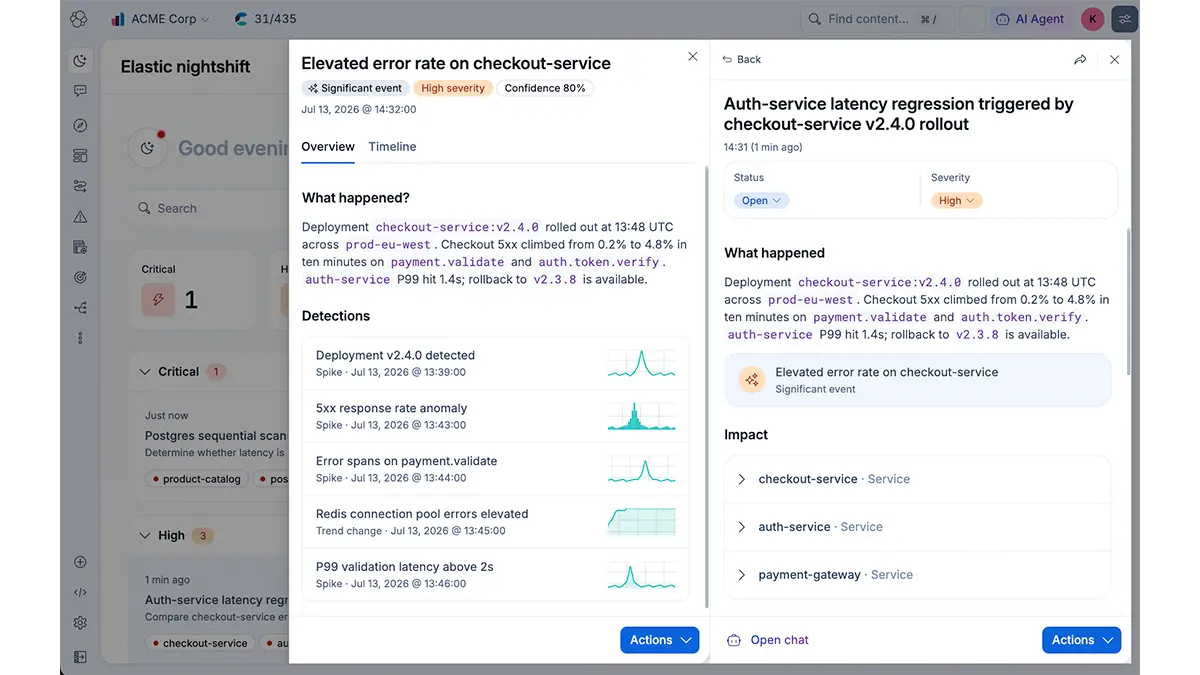
Elastic nightshift AI SRE doesn't wait for an alert to take action. Ready to go from day one, it continuously surfaces what needs attention, including "unknown unknowns," with no alert configuration required.
Guided demo
A future without on-call
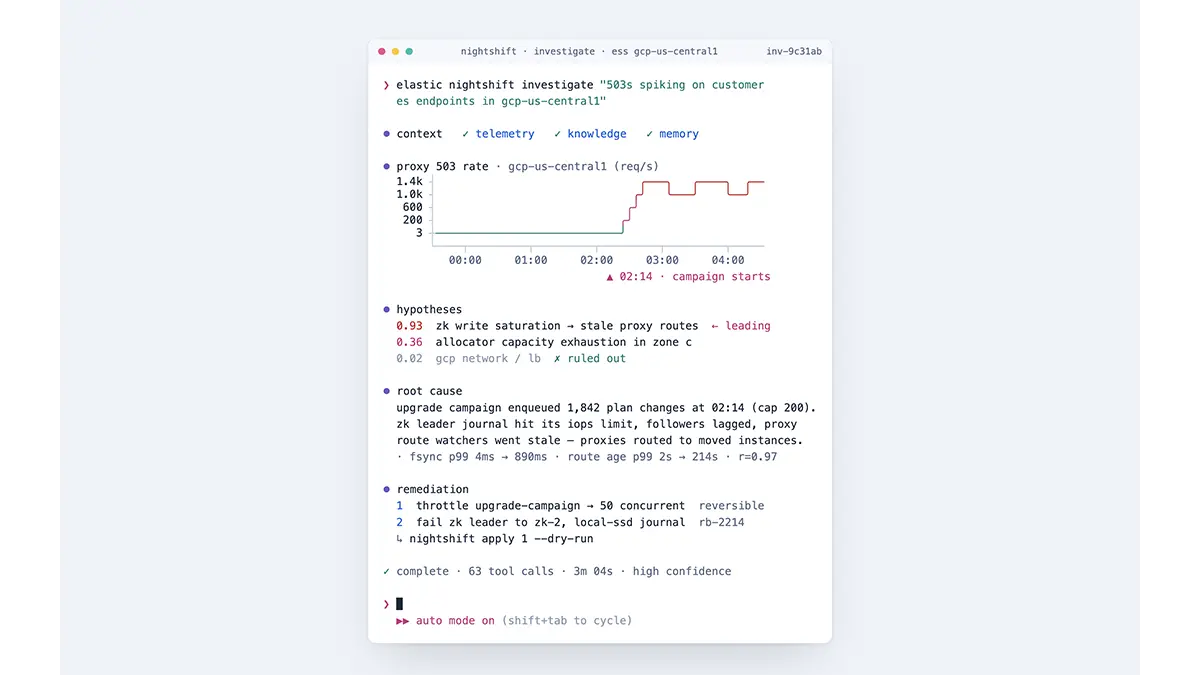
Elastic nightshift AI SRE never sleeps. It proactively detects and investigates production issues suggesting remediation with evidence — a full analysis, ready when you are paged.
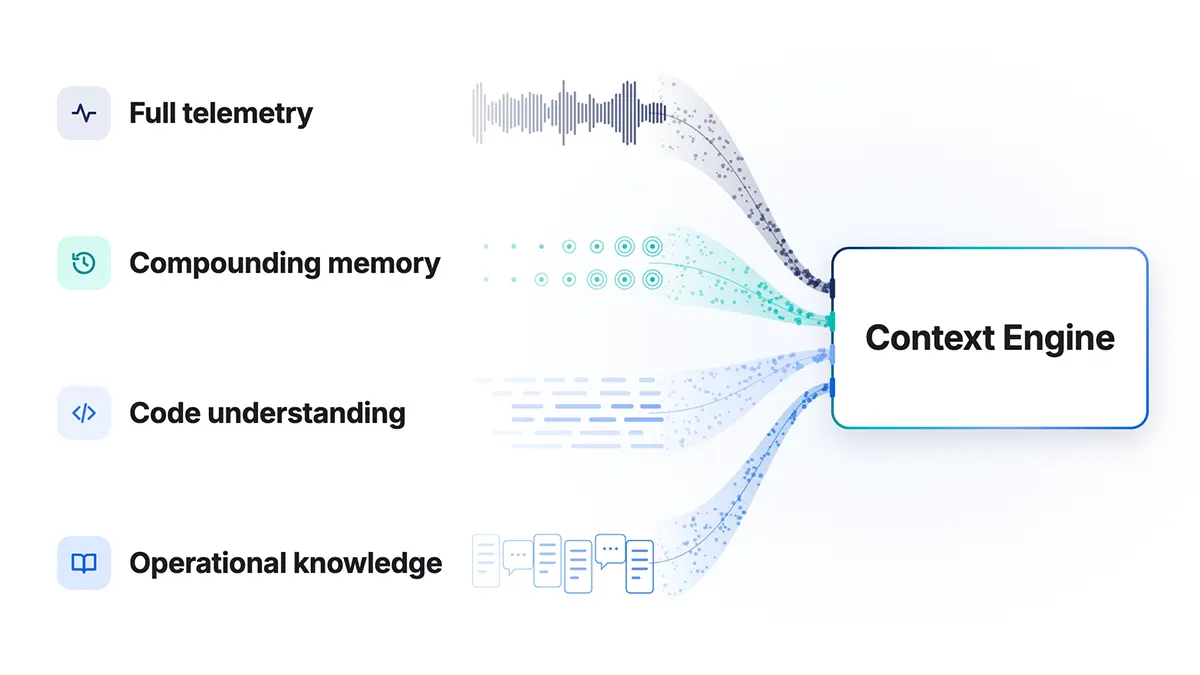
The investigation context an AI SRE needs
Elastic gives the SRE agent compact, relevant environmental context it can reason over, distilled from:
- Full telemetry: Best-in-class storage efficiency — no need to drop data
- Compounding memory: Richer history with every incident
- Code understanding: Connects code changes to telemetry
- Operational knowledge: Relevant organizational knowledge including runbooks, past incidents, and Slack threads
Deep knowledge. Continuous learning.
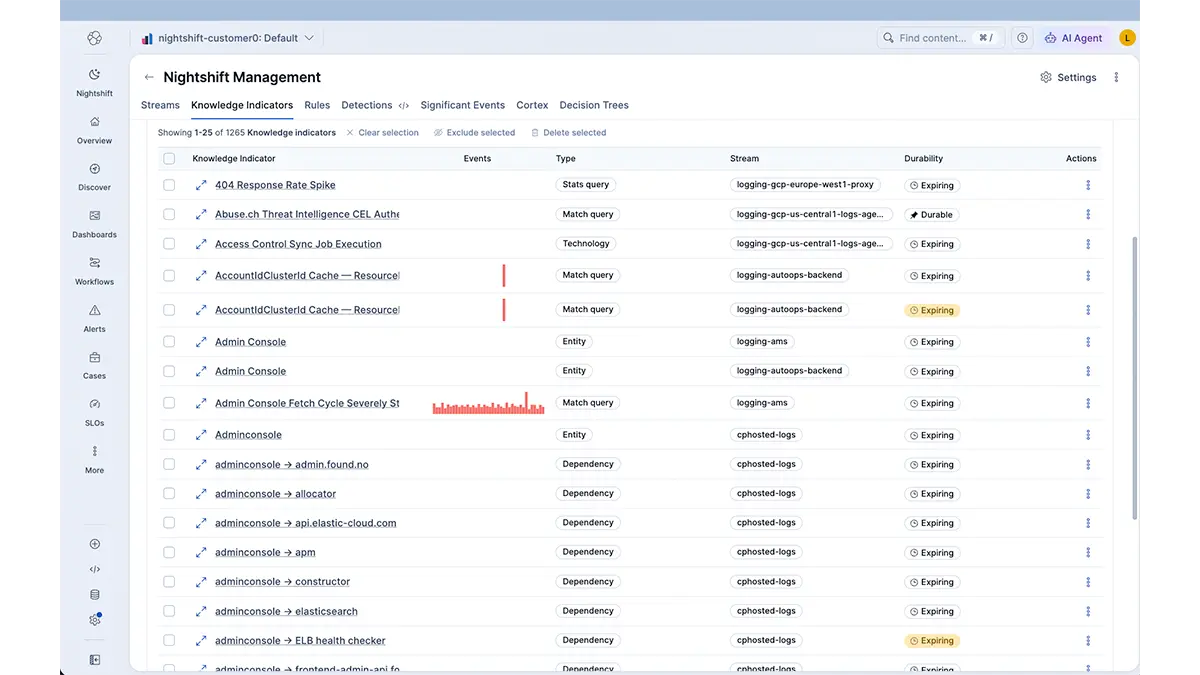
Combining telemetry with code intelligence obtained from your Git repositories and investigation memory that learns with every incident, Elastic nightshift AI SRE gives AI agents a complete picture of your environment from the start, saving hours of manual effort, speeding root cause analysis, and improving answer accuracy. And it’s priced to keep every log, metric, and trace.
Frequently asked questions
What is an AI SRE?
What is an AI SRE?
An AI SRE is a semi-autonomous agent that performs on-call site reliability engineering work — alert triage, incident investigation, root cause analysis, and remediation — without requiring step-by-step human direction. When an alert fires, it investigates immediately, before an engineer opens a laptop.
How does AI SRE reduce alert fatigue?
How does AI SRE reduce alert fatigue?
Alert fatigue happens when on-call engineers receive more alerts than they can meaningfully evaluate. An AI SRE handles triage autonomously: It investigates every alert, filters noise, and escalates only what needs a human decision. Engineers engage at the point where judgment matters, not at every notification.
How is AI SRE different from automated incident response?
How is AI SRE different from automated incident response?
Automated incident response executes predefined actions against known failure patterns (i.e., if X, do Y). It works well for problems you have already seen and scripted. AI SRE handles the investigation layer that scripted automation cannot reach: novel failures with no matching runbook, where the system has to reason across logs, traces, and recent changes to figure out what actually broke. In practice, automation covers the well-understood failure classes; AI SRE covers everything else.
What is the difference between AIOps and AI SRE?
What is the difference between AIOps and AI SRE?
AIOps applies machine learning to reduce alert noise and detect anomalies. It tells you something is wrong. An AI SRE investigates why it is wrong, querying observability data, tracing service dependencies, checking recent deployments, and returning a root cause with supporting evidence. AIOps handles the pre-alert stage; AI SRE handles what happens after the alert fires. Most teams end up running both. Elastic nightshift AI SRE delivers closed loop remediation, from detection to resolution. Most observability platforms already support AIOps-style anomaly detection; autonomous investigation agents are the more recent development.
Does AI SRE mean the system takes autonomous action in production?
Does AI SRE mean the system takes autonomous action in production?
Not by default. Most teams start with investigation and escalation, where the AI surfaces a conclusion and a human approves the next step. Elastic nightshift AI SRE supports a graduated trust model: read-only findings first, then human-in-the-loop remediation, then bounded autonomous execution for well-understood failure classes once the team has confidence in the agent's accuracy. Skipping straight to autonomous remediation is where most early deployments ran into trouble.
How do I know if I can trust what an AI SRE tells me?
How do I know if I can trust what an AI SRE tells me?
Elastic nightshift AI SRE shows its reasoning, including the specific telemetry queried, the hypotheses considered, and the evidence behind its conclusion. Knowledge graphs map system relationships across code and telemetry, continuously updating as the environment changes, so that recommendations are always current. A finding you can verify is a finding you can act on. This matters most in production, where an incorrect remediation can compound an incident rather than resolve it. Review the audit trail before acting, and make sure the AI SRE’s activities are supervised, not autonomous.
How much does it cost to run an AI SRE at enterprise scale?
How much does it cost to run an AI SRE at enterprise scale?
Inference cost in agentic workloads scales with context volume per investigation, not just request volume. An agent reasoning over raw telemetry gets expensive fast because each step in an investigation carries accumulated context from prior steps. Elastic stores raw telemetry at low cost and extracts context from logs, metrics, and traces before it reaches the model, so agents reason over distilled context rather than raw data. Per-investigation cost stays predictable as incident volume grows.