SOC leader's guide to AI in cybersecurity
SOC leaders are adopting AI-powered tools for a variety of use cases. Here's how to get the most out of AI in cybersecurity...


 Share on Twitter
Share on Twitter

 Share on LinkedIn
Share on LinkedIn

 Share on Facebook
Share on Facebook

 Share by Email
Share by Email

 Print this page
Print
AI in cybersecurity
Generative AI is drastically improving cybersecurity teams' productivity and operational resilience to security risks, especially when connected with the right tools and implementation strategy.
AI for security use cases has the potential to solve your team's most pressing challenges — from staying up-to-date with the changing threat landscape and cyber skills shortage to detecting and responding quickly to threats and automating manual processes. There's no way around it: AI applied to cybersecurity use cases can indeed transform your security strategy from one of reactionary fire-dousing into that of a proactive and preventive function.
While there are important considerations required before implementing AI into your existing security stack, this technology has become a must-have for the modern security operations center (SOC).
AI adoption in today's environment
For most enterprises, AI adoption for security is taking off. The global market for AI-powered cybersecurity tools is forecast to grow by 27.9% (compound annual growth rate) into 20301.
What is generative AI in cybersecurity?
When we talk about AI in cybersecurity, we’re referring to the integration of machine learning algorithms for threat detection, large language models (LLMs) for data analysis, retrieval augmented generation (RAG) for proprietary/organization-specific data enrichment, and other AI-related technologies that enhance the SOC’s detection, prevention, and response to cyber threats.
Generative AI (GenAI) is a natural fit for security analytics, with its inherent ability to analyze vast amounts of data to identify patterns, anomalies, and potential threats that traditional security systems might miss. AI-powered systems learn from historical data, adapt to new threats, and can even make real-time decisions based on predetermined parameters. Your team can wield this technology’s speed and power to improve the efficiency and effectiveness of your security operations.
The result: a more robust defense against increasingly sophisticated cyber attacks.
By continuously learning and evolving, AI security systems can help your team stay ahead of cybercriminals who are constantly developing new tactics to breach security defenses — including those who are themselves using AI to reach their goals.
AI for the SOC
SOC leaders have started adopting AI-powered tools for threat detection, incident response, endpoint vulnerability management, and predictive analytics.
Three primary applications of AI used in cybersecurity include:
- Automated threat protection: AI security systems analyze network traffic, user behavior, and system logs to identify suspicious activities. These systems can detect anomalies that might indicate a potential breach, so your security team can respond more quickly to mitigate the threat.
- Investigation and incident response: AI-powered systems can automate the initial stages of incident response, such as identifying the nature of the attack, isolating affected systems, and initiating remediation actions. This automation reduces the time it takes to respond to incidents, minimizing adverse impact on your organization. AI tools can also provide your team with the best next steps via workflow suggestions.
- Data onboarding: AI eases data onboarding for SIEM adoption or migration by automating the development of custom data integrations. With custom data sources automatically imported (and normalized through a common schema) with the help of AI, you gain much broader visibility into your data and open up the possibilities that come with that additional context.
AI enhances the overall security posture of your SOC. Organizational resiliency? Check. Proactive protection? Check. Scalability and flexibility? Check.
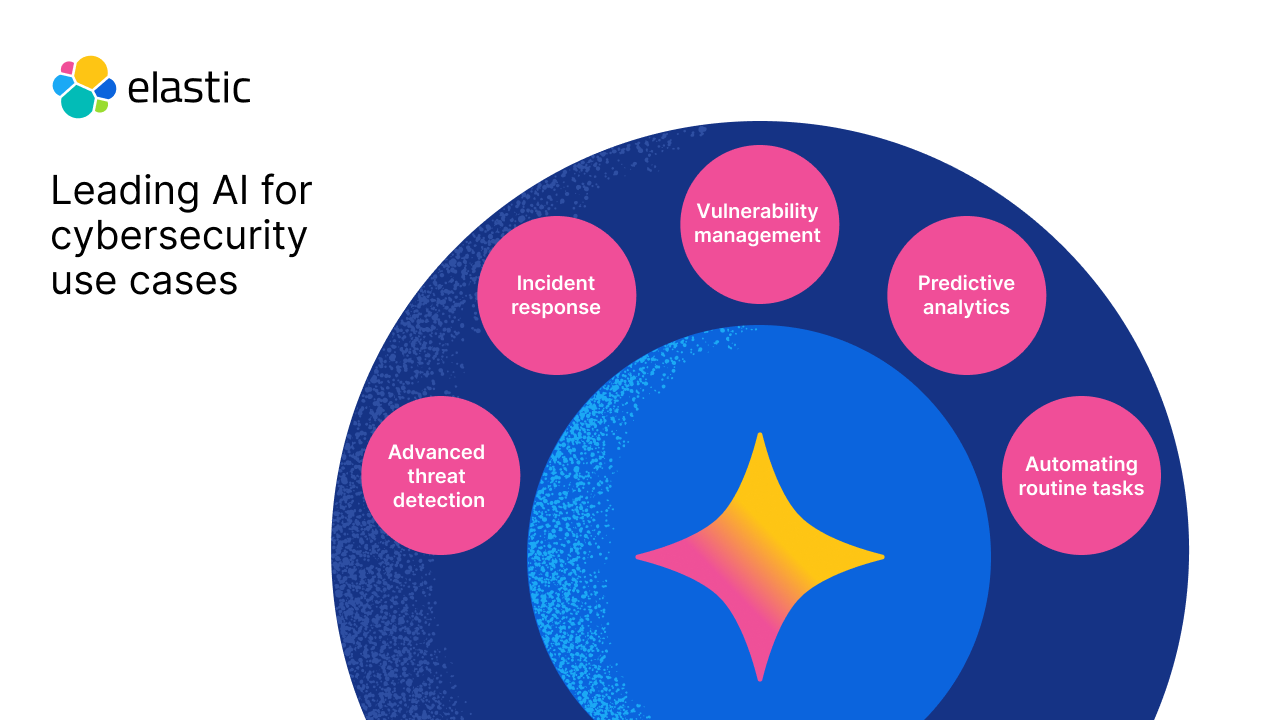
AI helps your SecOps with:
Advanced threat detection
AI security systems can analyze network traffic, user behavior, and system logs to identify anomalies that may indicate potential cyber threats. By detecting these threats early, you can take proactive measures to mitigate risk and prevent data breaches.
Incident response
Streamline the incident response process by automatically identifying the nature of an attack, isolating affected systems, and initiating remediation actions. Your team can substantially reduce the time it takes to respond to incidents, minimizing its impact on your organization and ensuring a faster recovery.
Vulnerability management
AI is great at helping security analysts identify and prioritize vulnerabilities based on their potential impact and exploitability. Your security analysts can focus their efforts on the most critical issues, ensuring that resources are used efficiently.
Predictive analytics
By analyzing historical data and emerging threat trends, AI can forecast future attacks and provide insights into potential vulnerabilities. This proactive approach enables organizations like yours to strengthen its defenses and stay ahead of cybercriminals.
Automating routine tasks
AI can enhance security operations by automating routine tasks such as threat hunting, malware analysis, and compliance monitoring. This automation reduces the burden on security teams so they can focus on identifying gaps in their attack surface, and more strategic and complex issues.
AI is still an emerging technology for cybersecurity use cases, but its ability to enable fast and scalable security analytics is quickly proving it to be an invaluable asset for your security stack.
AI benefits
AI-powered tools can address a wide range of use cases in cybersecurity, providing solutions to some of the most pressing challenges security teams face today. These use cases aren’t theoretical: 51% of surveyed business owners have adopted — or plan to adopt — AI for cybersecurity.2
How can AI help your security operations?
For security leaders like you, effectively analyzing and producing insights from your data is your best chance against a rapidly changing threat environment. In our recent survey, 96% of respondents reported their organization faces challenges analyzing and producing insights using their data.
This is where AI excels and traditional methods miss — its proficiency in pattern recognition, superhuman speed, and ability to scale allow AI to process and analyze vast amounts of your company’s proprietary data, detect anomalies, and respond to threats far more quickly.
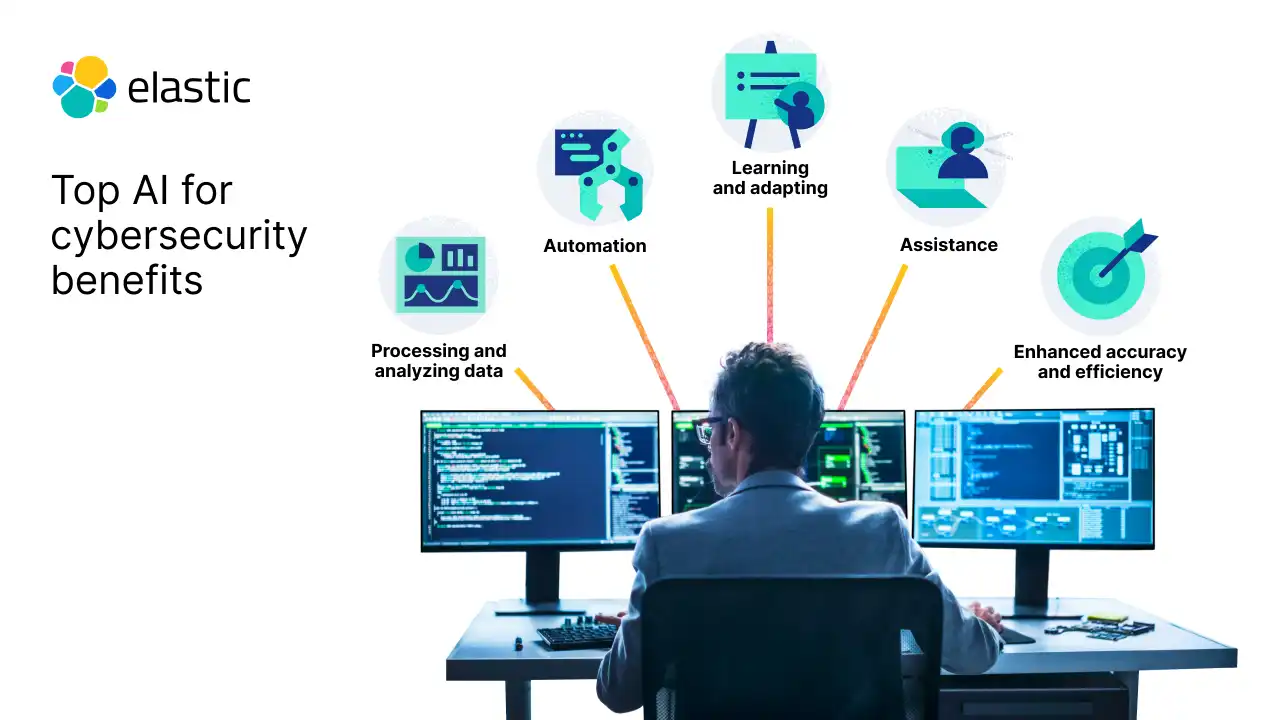
Top 5 benefits of AI in cybersecurity
Let’s focus in on the top AI five benefits that can transform your SOC:
Benefit 1 - Processing and analyzing data
While traditional security systems may struggle to keep up with the sheer volume of data generated by modern IT environments, AI can handle it with ease and provide real-time insights and actionable intelligence.
Benefit 2 - Learning and adapting
Cyber threats evolve… but so do AI security systems, which are continuously updating their models based on new data, ensuring they remain effective against the latest threats. This adaptability reduces the need for constant manual updates and adjustments.
Benefit 3 - Automation
Automating routine tasks (e.g., monitoring and analyzing security logs, managing alerts, incident documentation) reduces the burden on your security team.
Benefit 4 - Assistance
AI can assist with threat detection, incident response, and vulnerability management, saving you time and resources. This means that your security team can concentrate on more complex and critical issues.
Benefit 5 - Enhanced accuracy and efficiency
By minimizing false positives, AI security systems ensure that security analysts can trust the alerts and insights provided, leading to more efficient operations. These systems also help you stay ahead of cyber criminals, reducing the risk of successful attacks and minimizing the potential impact of security breaches.
AI limitations
GenAI in cybersecurity offers numerous benefits, but its use also comes with challenges and limitations.
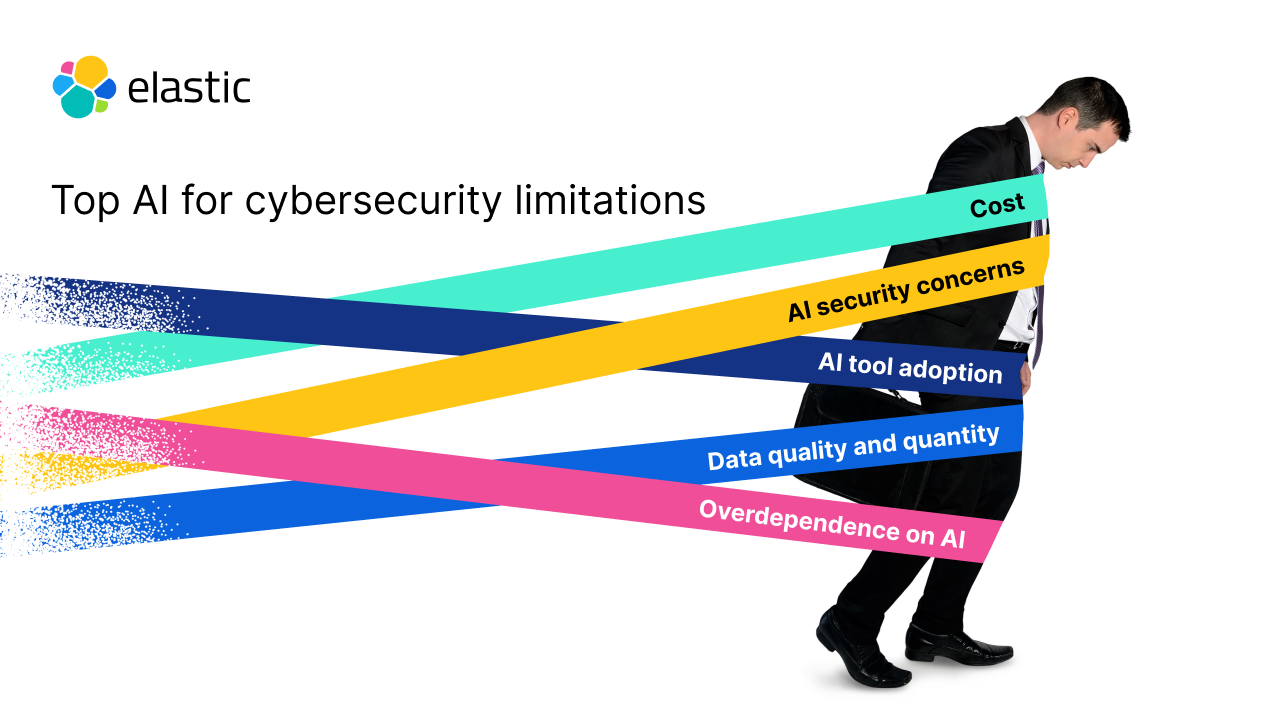
Here's your practical guide to the top five challenges and how to overcome them when adding AI to your security stack:
Data quality and quantity
AI security systems rely on large amounts of high-quality data to train and improve their models. Inaccurate or incomplete data can lead to incorrect conclusions and ineffective security measures.
Your solution: Gathering data from diverse sources such as network traffic, system logs, user behavior, and threat intelligence feeds ensures a comprehensive view of potential threats. Implement processes to handle missing values, correct inconsistencies, and ensure that the data is normalized to a common schema.
AI tool adoption
Onboarding friction may occur while integrating AI tools into your existing SecOps workflows. As with any new team member, a new AI tool will require time and context to properly onboard and understand the inner workings of your IT environment. In the beginning, AI will need guidance on which patterns to alert, and which patterns can be left alone.
Your solution: Prior to implementation, assess how the AI tool in question aligns with your current SecOps processes and infrastructure. Ensure it meets your identified needs and integrates well with existing systems. When implementing, start with a pilot phase where the tool is tested in a controlled environment. It gives you time to identify issues and assess its impact before full-scale deployment.
AI security concerns
The LLMs that AI tools utilize to perform their functions can introduce several weaknesses, including hallucinations (incoherent and incorrect responses to user queries), data toxicity (garbage in, garbage out), and data leakage. Data leakage can occur when a user shares private or confidential information with the model, or when the LLM’s response contains personally identifiable information (PII) or proprietary information memorized by the model during the training process. LLMs’ collection and analysis of large amounts of data can also raise AI security concerns about data privacy and the potential for misuse.
Your solution: Enhance and adapt pretrained models with an eye toward downstream applications. This best practice means providing additional domain- and task-specific data to a pre-trained model, either through fine-tuning (directly updating the parameters of pre-trained models using a specific data set) or with RAG. Be mindful of privacy concerns by ensuring that your AI implementation complies with relevant privacy regulations and protects sensitive information. A clear policy for data governance is a good start.
Overdependence on AI
AI tools can profoundly increase the productivity, efficiency, and overall security posture of your team, but they aren’t a catch-all. While these tools can significantly reduce the rate of false positives and false negatives compared to traditional systems, AI isn’t always 100% perfect.
Your solution: AI tools aren’t a replacement for your human teams — striking the right balance between automation and human intervention is crucial. Understand and track all your organization’s AI use cases. Develop and begin to implement internal AI governance, processes, and policies for any AI-powered tasks.
Cost
The cost of implementing AI in cybersecurity can be a barrier for some organizations. Developing, deploying, and maintaining AI solutions requires significant investments in technology and skilled personnel.
Your solution: 78% of IT and cybersecurity professionals plan to increase spending for security solutions with GenAI capabilities3. Allocating budget for AI technologies will, sooner or later, become a necessary expenditure of your overall security budget. Fortunately, adopting a scale-as-you-grow AI cybersecurity solution is likely to benefit you, especially when considering that such AI technologies significantly uplevel the skills of your existing security team members.
AI, the future
Cybersecurity is moving at light speed. As you build up your organization’s resilience, AI can help you prepare for the challenges ahead.
This technology is expected to play an increasingly central role in helping security teams defend against cyber threats in the years to come — particularly as adversaries evolve the use of AI tools to fuel their objectives.
What will future AI-powered threats look like?
The number of threat actors will increase, as will the frequency, scope, volume, and sophistication of various types of attacks.
In the latest Global Threat Report, the Elastic Security Labs team forecasts that vulnerabilities in AI models may lead to data exposure or system poisoning that may be challenging to discover. Adversaries might, for example, discover a new way to extract privileged medical information from a healthcare prompt or instruct a hosted model to take a disruptive action — and they are likely researching methods to do so right now.
As cybercriminals up their game, cybersecurity defenders will need to continuously evolve to stop them.
Will AI replace human security analysts?
No. While AI will significantly enhance cybersecurity operations, it won’t replace human security analysts.
AI and human analysts will work together in a complementary fashion, with AI handling the traditionally data-intensive and repetitive tasks, and humans focusing on higher-level analysis and decision-making. This collaboration leads to more efficient security operations, leveraging the strengths of both artificial and human intelligence to accomplish stronger resilience. The SOC analyst of today that adopts AI-driven processes into their workflow will multiply their defense impact — becoming, in essence, a SOC AI analyst.
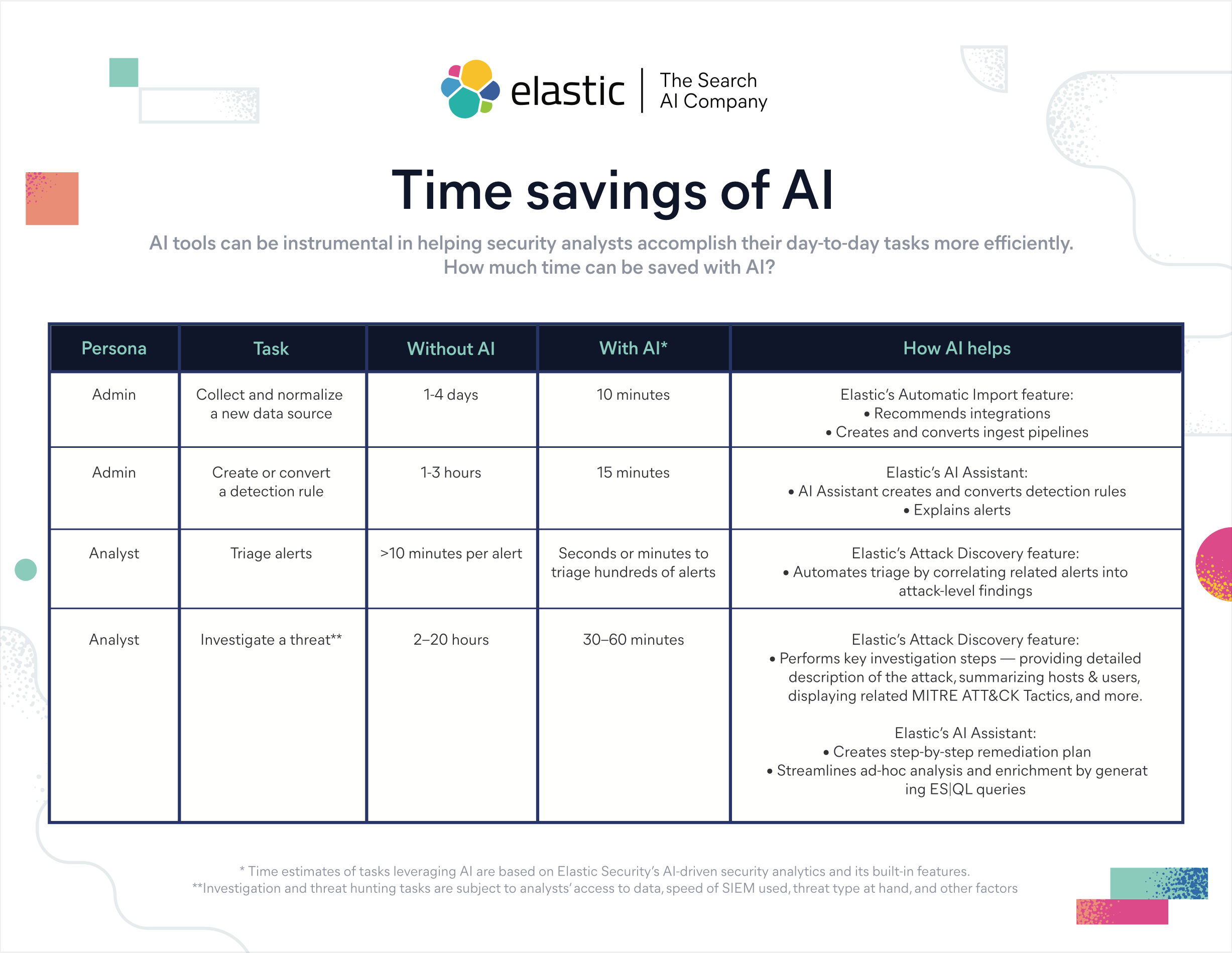
What will AI’s role in cybersecurity be?
AI will continue to enhance the ability of security systems to analyze vast amounts of data in real time, identifying patterns and anomalies that indicate potential threats. AI will also continue to augment the capabilities of security analysts, enabling them to tackle the complex and ever-expanding threat landscape. With tools like Elastic AI Assistant for Security, you can experience this force-multiplying effect today.
AI's role in cybersecurity will also expand to include more proactive measures. Predictive analytics will become more refined, allowing organizations to anticipate and prevent attacks before they occur.
AI will continue gaining traction for its ability to enrich investigations and enhance the security team’s defense impact. The integration of AI into cybersecurity tools will provide an additional layer of intelligence and action in a world where your adversaries will themselves be wielding AI against your organization.
Wondering how you can harness the power of AI for your team? See how leading organizations are implementing AI into their SecOps.
Footnotes
1 SOURCE: Statista
2 SOURCE: Forbes
3 SOURCE: Generative AI for Cybersecurity: An Optimistic but Uncertain Future
Share
- Share on Twitter
Share on Twitter
- Share on LinkedIn
Share on LinkedIn
- Share on Facebook
Share on Facebook
- Share by Email
Share by Email
- Print this page
Print