Agentic Frameworks Summary
Agentic systems require security teams to balance autonomy with alignment, ensuring that AI agents can act independently while remaining goal-consistent and controllable .
Security teams and SOC analysts still face the same tier-1 response challenges since the early 2000s, from alert volumes to missed threats. While generative AI offers promising solutions, implementing effective AI-augmented security systems beyond simple LLM integration requires deep knowledge and nuanced details to address today's complexities and the manual decision-making process.
Transforming detection engineering with agentic frameworks
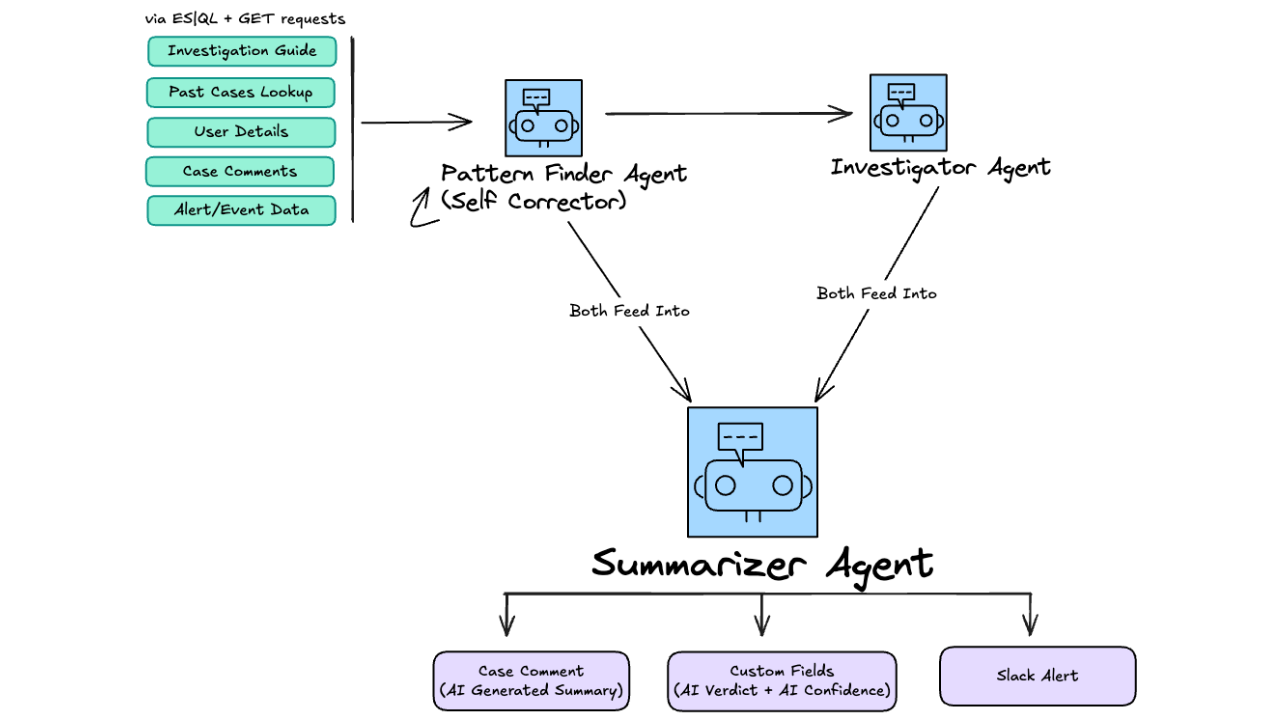
Agentic frameworks represent a fundamental shift in how security operations function. Rather than relying on static playbooks, AI agents can analyze alerts, gather contextual information, and dynamically adapt their behavior based on findings. These systems excel at alert triage, automatically enriching data with threat intelligence, and continuously optimizing detection rules based on observed patterns. By integrating reasoning capabilities, agents interpret context, select optimal enrichment sources, and iteratively refine conclusions, behaving more like skill analysts than a rigid script.
Engineering challenges and practical solutions
Building production-grade agentic systems, however, presents distinct engineering challenges. Practical solutions involve careful agent design and specialization (focused experts vs. versatile generalists), robust structured input/output schemas for reliable inter-agent communication, infrastructure integration, and security tool integration for accessing contextual data. Trust in automated decisions can not be compromised with high stakes.
Fortunately, framework-supported quality assurance mechanisms like critique loops for self-evaluation and guardrails against hallucinations / prompt injection techniques are available. Even cost management becomes a critical decision point as agents can generate many API calls during investigations and use many tokens, requiring LLM performance optimization and efficient resource usage.
Human-AI collaboration: The path forward
These technologies augment, rather than replace, security analysts, and we are still far from the traditional AGI notions. By automating routine alert analysis, agents free human analysts and detection engineers to focus on complex investigations and strategic security decisions, rather than being overwhelmed with mundane tasks.
Access the complete whitepaper Agentic Frameworks: Practical Considerations for Building AI-Augmented Security Systems, for detailed considerations when developing advanced AI-augmented security systems for your organization.
How helpful was this content?
Related Content
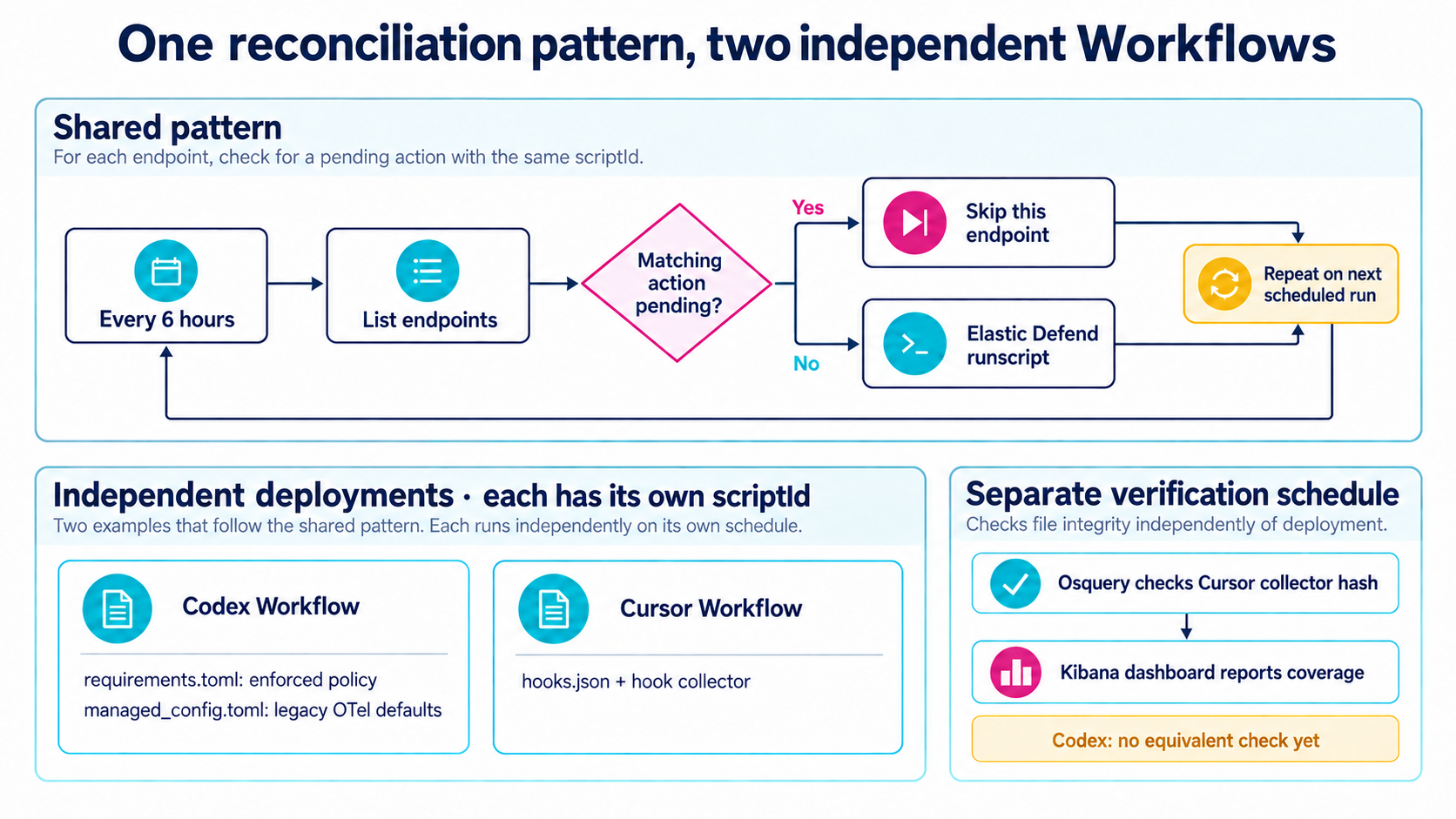
No MDM for Linux? A 68-line Elastic workflow keeps every endpoint's config current

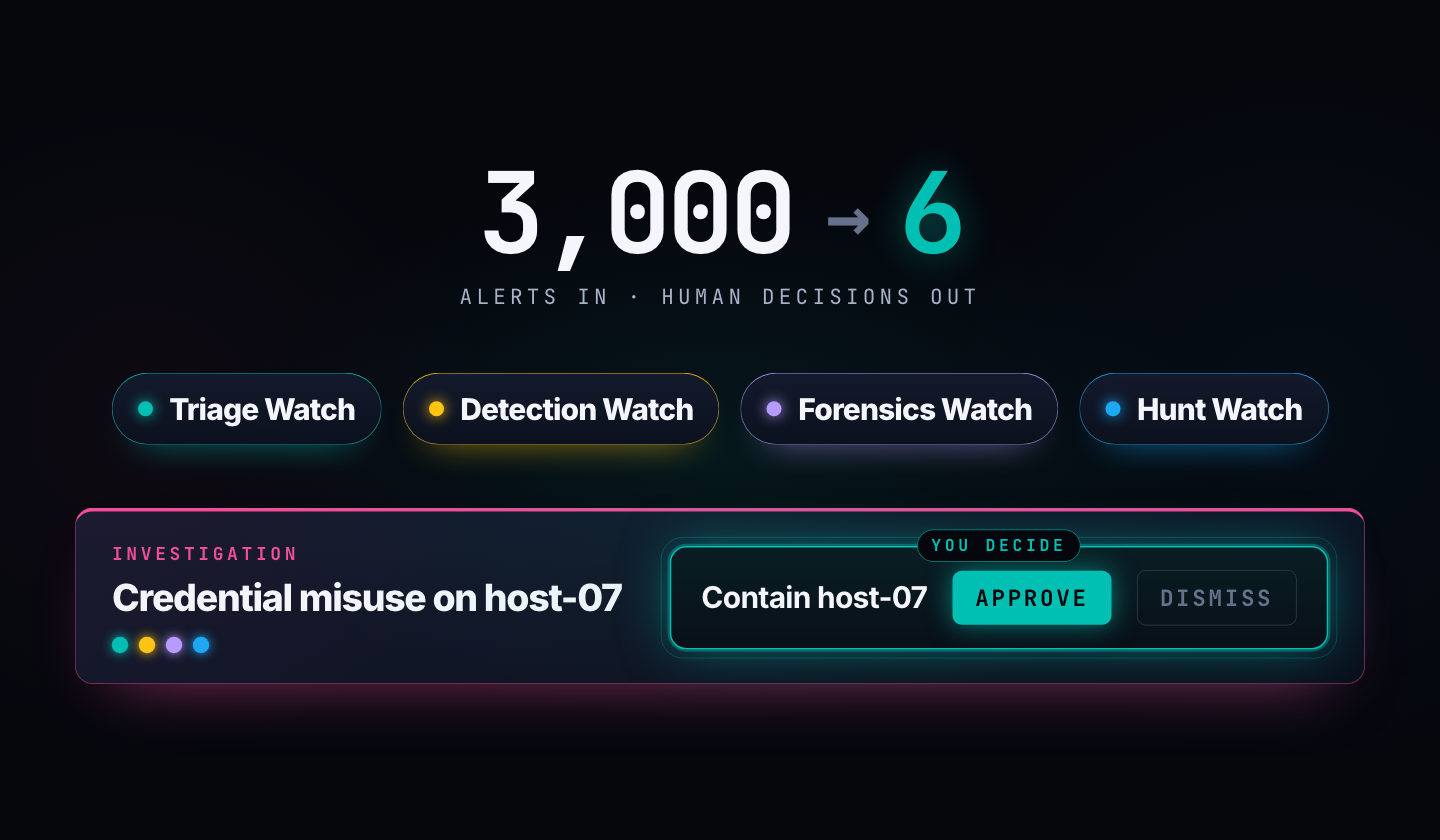
Quarantined isn't contained: Agentic phishing response with Elastic and Sublime