Accelerates time to resolution
Customers can chat with generative AI models to quickly surface issues using fast Elastic vector databases.
Reduces manual security tasks
Elastic pulls together telemetry data from across customer ecosystems, eliminating the need to manually piece together data.
Demonstrates compliance faster
With Gigamon telemetry data feeding into Elastic, customers can run reports at any time to help demonstrate ongoing regulatory compliance.

Gigamon uses Elasticsearch and generative AI across security and observability processes to help analysts cut through noisy information to spot and solve issues faster
Digital footprints continue to expand to encompass everything from mobile devices and office equipment to manufacturing facilities and security cameras. As the number of end points grows, so do the potential entry points for bad actors. Organizations need to choose the right tools to understand what’s happening across their networks to keep their entire ecosystem secure.
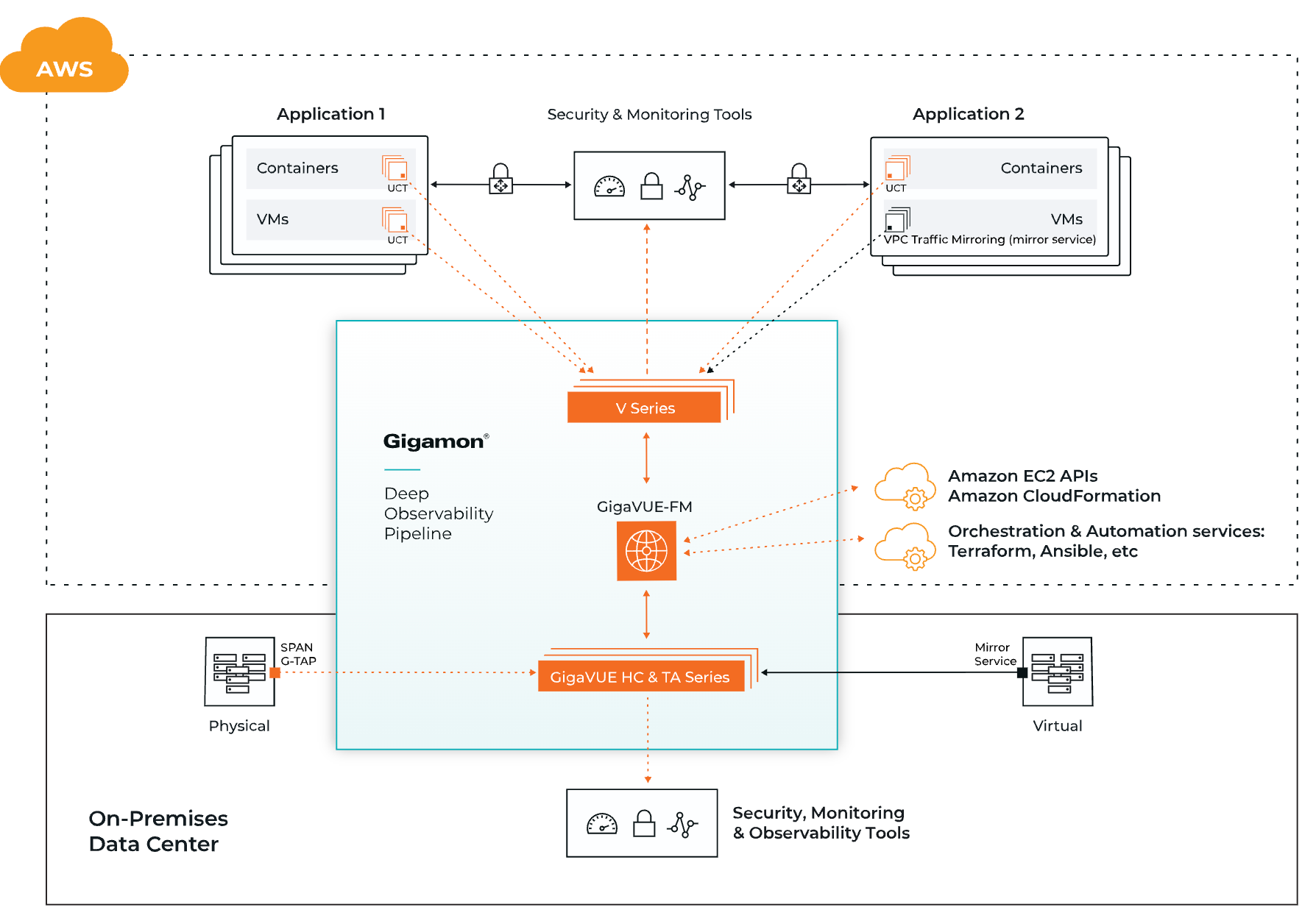
Gigamon offers a deep observability pipeline that reduces blind spots and helps organizations gain much greater visibility into network traffic, no matter the scale or complexity of their infrastructure.
“We generate a unique level of telemetry from data in motion, providing customers with the information that they need to understand security and performance across any environment, without the delays or limitations offered by traditional monitoring,” explains Stephen Goudreault, cloud security evangelist at Gigamon. “But just having information isn’t enough. People need to know what it means and what steps they should take next.”
With Elastic Cloud and generative AI, Gigamon is closing those gaps, cutting through noisy dashboards to make it easy for anyone to understand exactly what’s happening in their organization’s ecosystems for more secure, compliant environments.
"With a constant telemetry stream from Gigamon, customers can run reports in Elastic at any time to help demonstrate compliance."
Connecting security gaps with Elastic
As a former threat researcher, Goudreault takes pride in how Gigamon picks up threats that classic logging misses. “People are always wowed by the unseen risk that we find on a given network,” says Goudreault. “It’s not just about obvious security gaps. For example, an unencrypted printer is just one of countless risks to HIPAA compliance that some might never think of. This is important information that decision-makers need to know.”
But spotting vulnerabilities and sources of friction is not easy, especially in a complex environment. Security analysts often spend their days manually piecing together siloed datasets before they can even begin to look for signs of security or performance issues.
With Elastic, Gigamon offers a way for customers to layer machine learning and artificial intelligence capabilities to analyze data. Elastic not only helps to automatically identify potential anomalies, but it also delivers reports to demonstrate proper governance. “Once you are compliant, one of the challenges is that you must prove it through ongoing reporting,” explains Goudreault. “With a constant telemetry stream from Gigamon, customers can run reports in Elastic at any time to help demonstrate compliance.”
"Generative AI is a force multiplier. With just a few questions, it can surface risk or performance problems, reducing operational friction. Elastic is a key solution for our GenAI needs."
Digging deeper into data with generative AI
To more fully close the security and observability gap for clients, Gigamon believes that the answer lies in generative AI. Ideally, users will simply ask a generative AI model to identify the top three points of risk in an environment or determine what communications have flowed into or out of a virtual machine.
Gigamon works to simplify generative AI implementations across the board. Customers feed Gigamon telemetry data into an Elastic vector database. From there, they can use any AI model to start asking questions of data using natural language.
The result is a much faster mean time to resolution. Reports of slow response times mean more than just poor user experiences. They can potentially indicate that organizations are driving up costs through inefficient resource usage, or they’re increasing security risk as users try to find workarounds.
Now it takes just a few questions for an operations team to figure out if there’s a problem with the host, oversubscribed workloads, or a potential security threat. “A lot of times we scramble engineering resources to dig into a potential performance problem, only to discover that there’s a cloud outage that’s beyond our control,” explains Goudreault. “With just a few questions, we can find out what’s happening fast so we can focus our time on fixing the things that matter.”
Protecting customer ecosystems
Goudreault praises Elastic for its capabilities and performance as well as its partnership. “My experiences with Elastic have been very positive. The Elastic team really leaned into the solution to help us protect what people normally can’t see.”
With Gigamon and Elastic working together, customers can do more with telemetry data, mapping risk, improving performance, and providing services for people around the world.
