67% cost reduction
Gearfire cut costs thanks to serverless architecture with Elastic that scales compute and storage independently, eliminating unnecessary expenses.
Boosts operational efficiency
Developers can focus on building new features and improving products instead of maintenance with Elastic’s fully managed serverless solution.
Strengthens cybersecurity
With Elastic, Gearfire increased resilience against bot attacks and data issues, preventing ecommerce query latency and cost spikes.
Elastic Cloud Serverless enables ecommerce leader Gearfire to scale cost-effectively and defend against bot attacks while protecting margins and accelerating growth
Gearfire serves the shooting sports industry, providing ecommerce, point-of-sale, and merchant service solutions that enable firearms retailers across the US to launch their businesses and operate efficiently.
From an IT and operations perspective, controlling the cost per customer is critical to protecting margins. That means Gearfire needs predictable pricing and a technology stack that scales in line with business growth.
"When we first began building, the choice was between Elastic and OpenSearch,"" says Matt Carden, CTO of Gearfire. "But it was an easy decision for us to go with Elastic for its features, support, and overall flexibility."
He also highlights Elastic's strong documentation, large database of community answers, and innovative roadmap that is preparing the company for future generative AI use cases. Today, Elasticsearch, built on the Search AI Platform, powers full text search queries on the ecommerce sites served by Gearfire.
"When we first built the business, the choice was between Elastic and OpenSearch. But it was an easy decision for us to go with Elastic for its features, support, and overall flexibility."
One of Gearfire's early challenges was with its ingestion pipeline. For example, if a distributor listed 1,000 new products, Gearfire had to process those listings for every one of its retail customers. As distributors were enabled, data ingestion slowed considerably.
Additional challenges came from bot farm attacks that slowed or interrupted services. If the business needed to scale up CPU capacity to handle challenges, it also incurred costs for memory and storage that it didn't need.
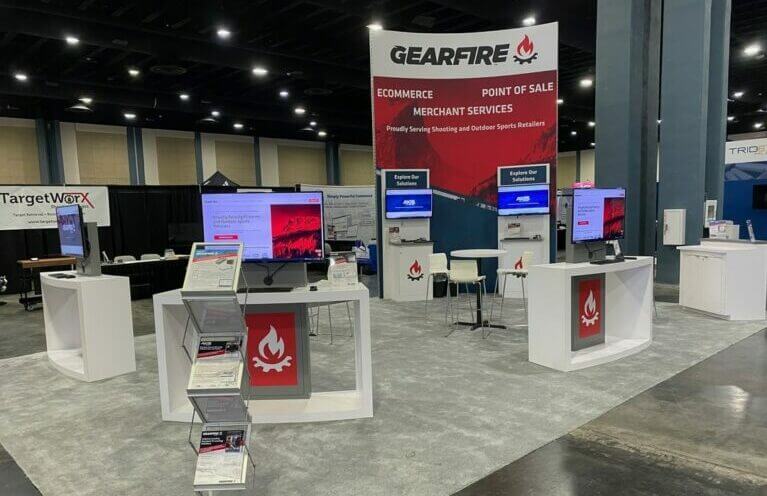
Saving and streamlining with serverless
To address these issues, Gearfire rebuilt its technology foundation around serverless architecture, from hosting to API integrations. The company doesn't run a dedicated DevOps team and instead manages everything through infrastructure as code.
"When Elastic Cloud Serverless first became available, it was something we were very excited about," says Carden. "It's fully managed, so we can get projects started quickly without worrying about operations or upgrades."
Elastic Cloud Serverless is based on a decoupled compute and storage model that eliminates the inefficiencies of repeated data transfers while taking advantage of the reliability of object storage. By separating these critical components, Gearfire can scale indexing and search workloads independently, addressing the long-standing challenge of balancing performance with cost-efficiency in high-demand scenarios.
Reducing costs by 67%
Elastic Cloud Serverless transformed the way Gearfire runs its business. It automatically scales to meet data, usage, and performance needs, delivering the full power of Elasticsearch without the operational overhead. "The overall cost savings have been significant," says Carden. "In the first month alone, Gearfire saved around 67%."
The financial impact is only part of the story. Freed from infrastructure management, Gearfire's developers now focus on building new features and enhancing products rather than maintaining systems. That translates directly into value for customers. "With Elastic Cloud Serverless, we can onboard new customers easily," explains Carden. "Once we have their information, we can activate them immediately, which creates a far better overall experience."

Beating the bots
Elastic's scalability also provides greater resilience. If a bug corrupts data in Elasticsearch and large-scale reindexing is required, Gearfire can execute the process without affecting the latency of ecommerce queries. This removes the need for capacity planning whenever data needs fixing.
Cybersecurity has also been strengthened. Bot farm attacks now barely register. "Now, we don't even notice when attacks hit us. Costs don't spike, which was a welcome outcome," says Carden.
Looking ahead, Gearfire is already exploring new ways to use Elasticsearch to improve checkout processes and expand data-driven capabilities. "The real advantage is knowing that costs are under control," Carden says. "That gives us the freedom to innovate, whether it's modifying data structures or pushing new information into the system, to make business even smoother for our customers."
