Elastic and Tencent Cloud deepen strategic partnership to power AI-era search foundation


 Share on Twitter
Share on Twitter

 Share on LinkedIn
Share on LinkedIn

 Share on Facebook
Share on Facebook

 Share by Email
Share by Email

 Print this page
Print
Tencent Cloud and Elastic announced an expanded strategic collaboration in Shenzhen in August 2026. The companies will deepen their technical and product collaboration across AI search, enterprise data, and agentic applications, helping enterprises establish dedicated AI search for the AI era.
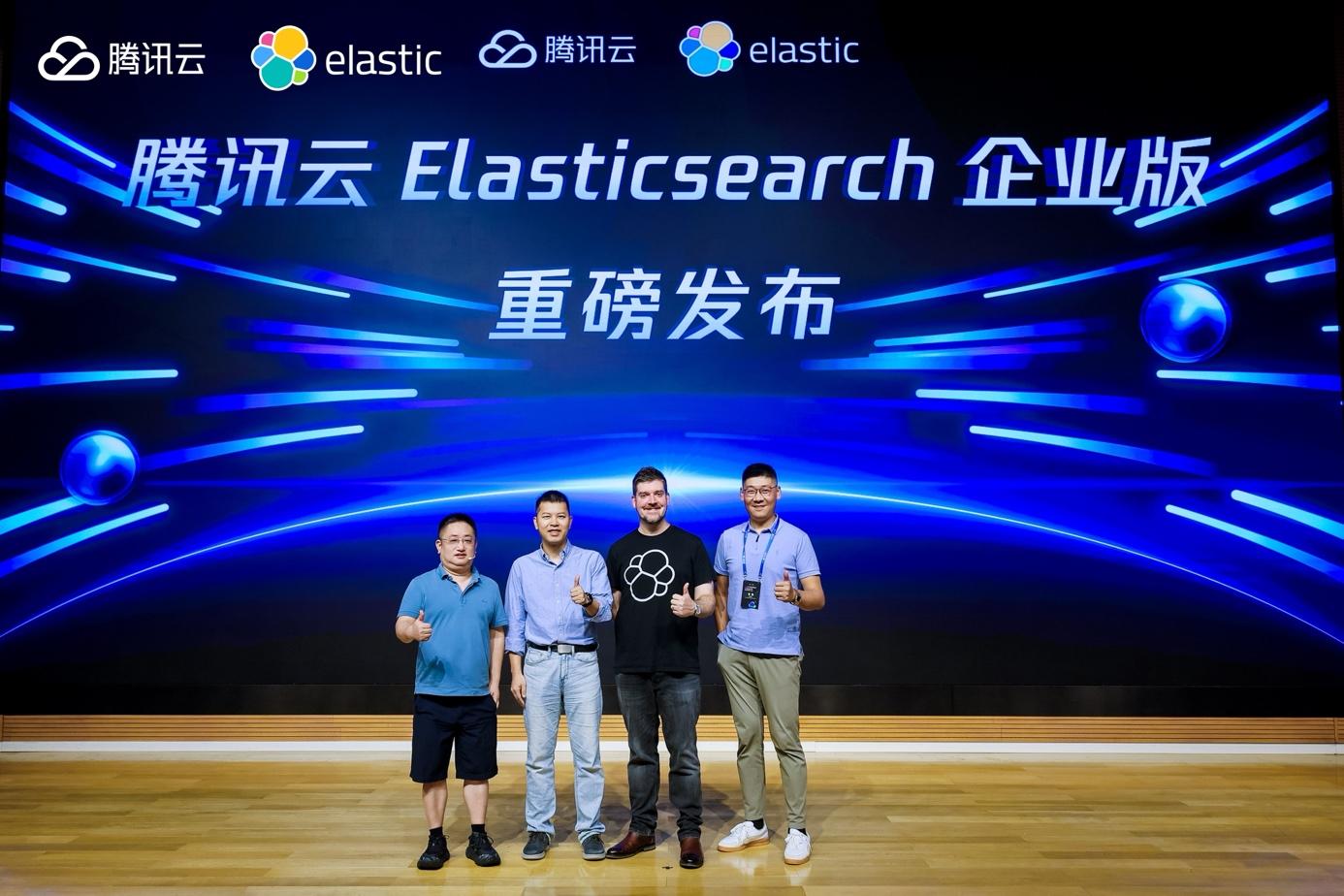
The two companies also jointly launched Tencent Cloud Elasticsearch Service (ES) Enterprise Edition, which introduces Elastic's enterprise-grade search and AI capabilities to the service.
Elasticsearch is one of the world's most widely used open source search engines. The Elasticsearch Platform — the foundation for its search, observability, and security solutions — is used by thousands of companies, including more than 75% of the Fortune 100. It supports tasks, such as product search in ecommerce, in-app search, and the troubleshooting and analysis of system logs. Tencent Cloud has provided cloud services based on Elasticsearch since 2016.
AI is changing the role of search. Large language models do not inherently understand an enterprise's internal information. To answer business questions, they need to retrieve relevant content from enterprise data in real time. Agents also need to continuously locate information and tools as they carry out tasks. Search is becoming a way to provide AI systems with grounded enterprise data.
Patrick Dixon, senior director of channels and alliances for APJ and vice president for China at Elastic, said that as large language model capabilities advance, retrieval context is becoming increasingly important to enterprise AI applications. For agents, the ability to locate accurate and reliable enterprise data when it is needed directly affects the quality of subsequent responses, decisions, and execution.
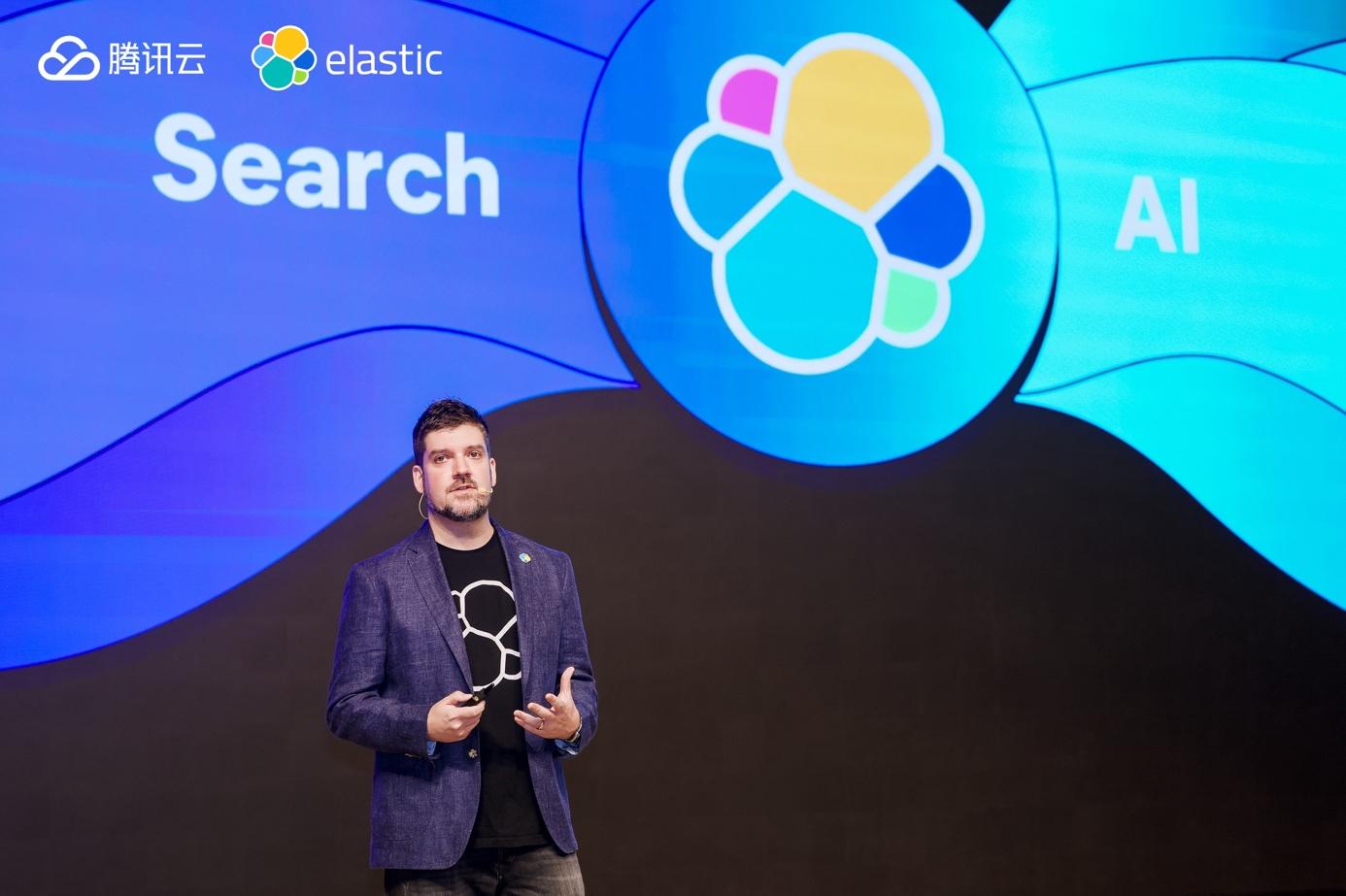
Tencent Cloud ES Enterprise Edition strengthens AI search, model integration, and agent connectivity. Enterprises can combine keyword and semantic search, enable large language models and agents to call search results directly, and keep large volumes of historical data searchable to provide AI with more complete business context.
Alongside Elastic's native capabilities, Tencent Cloud has continued to enhance ES with in-house engineering. In selected AI search scenarios, performance has improved by up to 5x, hybrid-search latency has fallen by 60%, and memory consumption has been reduced by more than 50%.
Enterprises can add AI search capabilities without changing their existing data architecture and can use the service together with Tencent Hunyuan large language models and the Tencent Cloud TCRay inference platform. Customers running open source editions or self-managed clusters can also access technical migration and upgrade services.
These capabilities are already in use. Tencent ima uses ES as the underlying retrieval layer for its knowledge base, supporting both keyword and semantic search. After Tencent optimized the system for many users searching the knowledge base concurrently, memory consumption fell by 71%, and retrieval performance improved by 58%.
At NIO, ES serves as part of an AI search and security data intelligence foundation. It identifies the information most relevant to a current event from large volumes of security data, which AI then analyzes further. The system processes hundreds of billions of records in a single quarter. In one real-world attack, an attack chain that previously took analysts most of a day to investigate manually could be retrieved and reconstructed in two minutes.
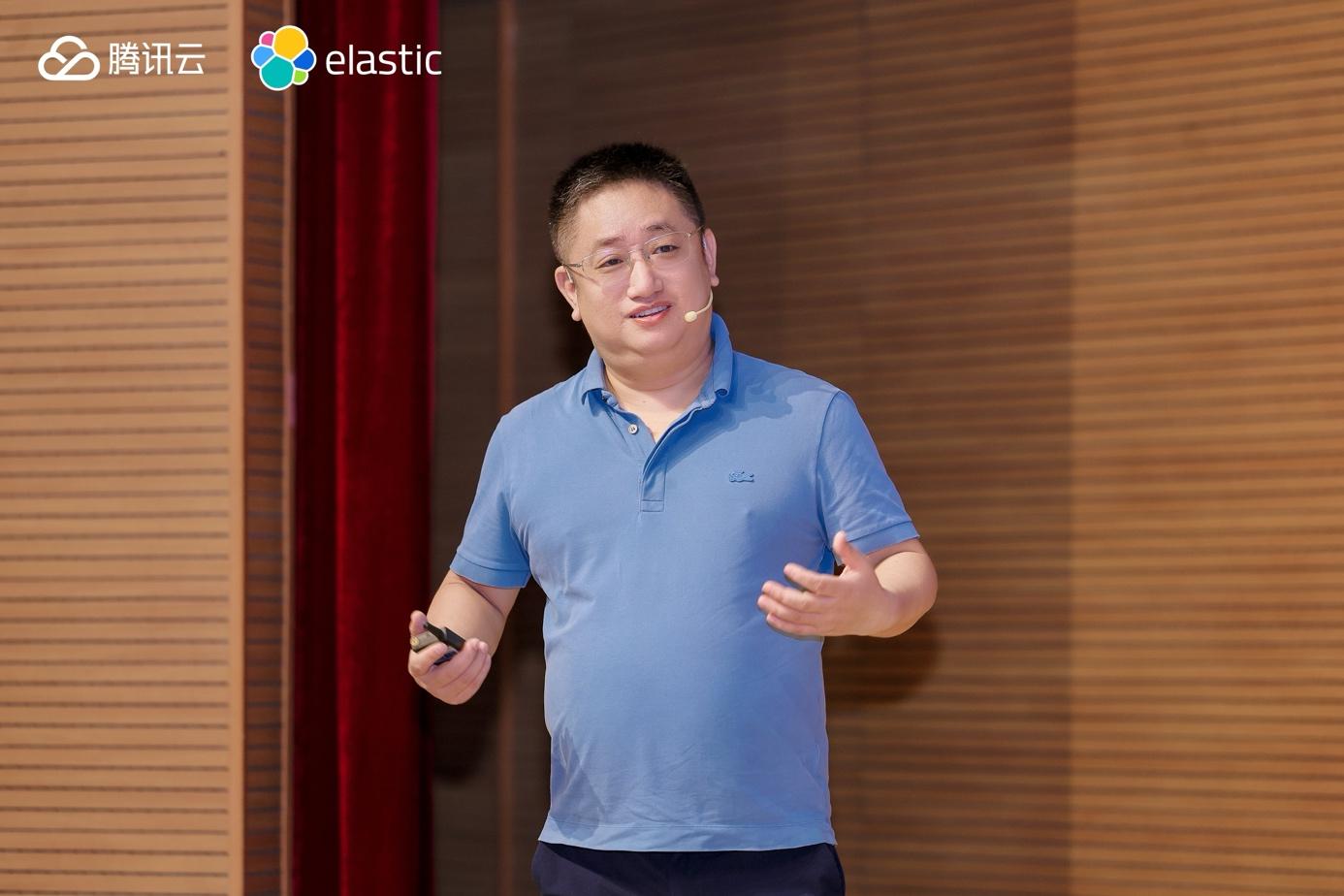
Cheng Bin, general manager of data platform products at Tencent Cloud Data Analytics, says, "AI search is evolving from a standalone retrieval capability into an integrated search platform that connects enterprise data, models, and agentic applications. Tencent Cloud will combine Elastic's enterprise-grade capabilities with its own experience operating large-scale systems and its AI ecosystem, helping more enterprises establish robust AI search capabilities for the AI era."
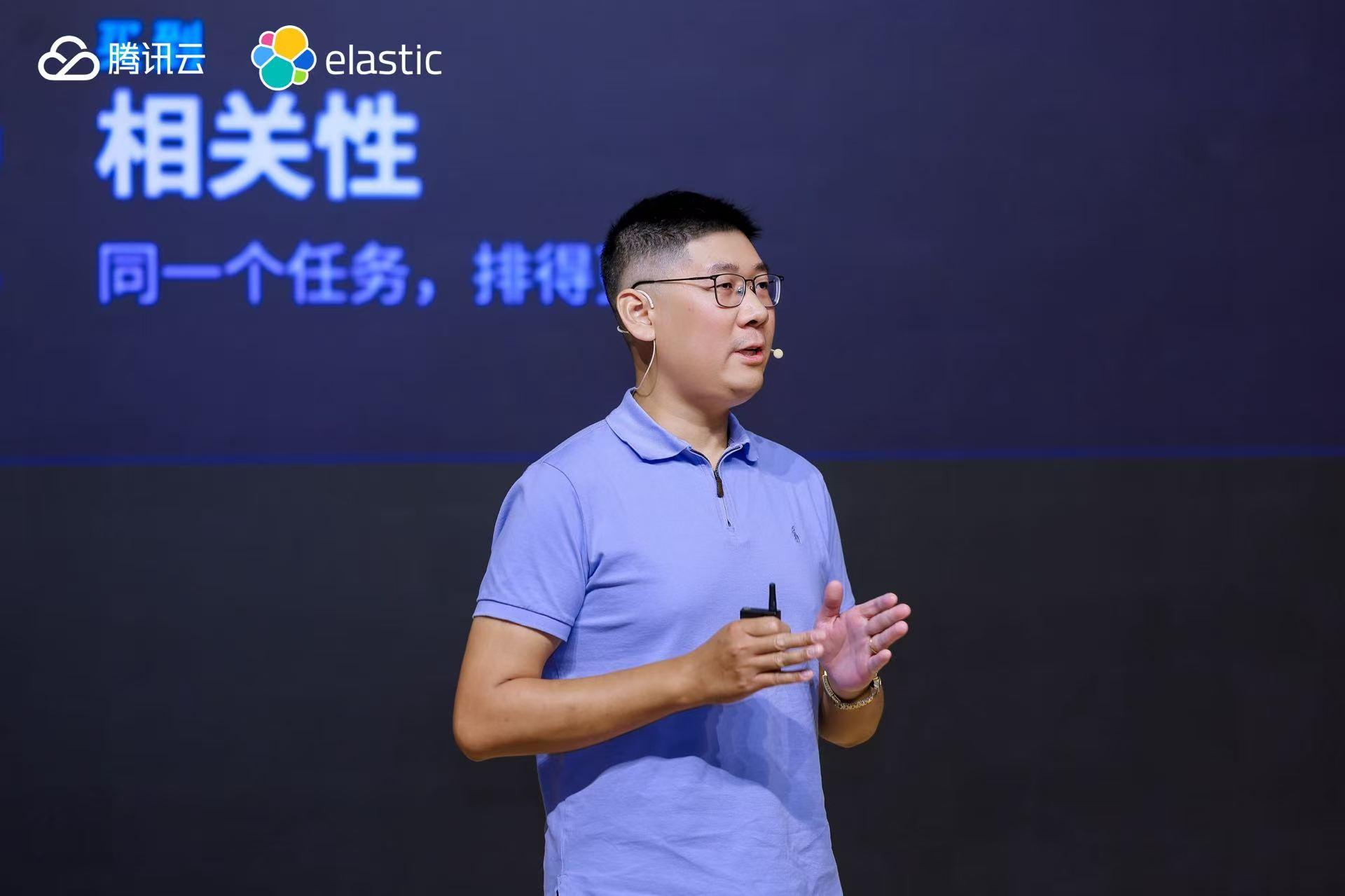
Han Xiao, vice president of AI at Elastic, says that as large language models turn toward longer horizon tasks in 2026, search has more room to contribute. "Search in 2026 is, in essence, about test-time compute," he says. "When search quality falls short, teams should first consider whether additional inference compute can address the problem before adding data or switching to a larger model."
Tencent Cloud was among the early cloud providers in China to form a Platinum-level partnership with Elastic. Over the past seven years, Tencent Cloud has consistently ranked among the leading contributors to the Elastic open source community. Tencent Cloud ES now runs 20,000 clusters and 100,000 nodes that reliably support search traffic peaks for large-scale live events, including the China Central Television Spring Festival Gala and the Paris Olympic Games.
The release and timing of any features or functionality described in this post remain at Elastic's sole discretion. Any features or functionality not currently available may not be delivered on time or at all. In this blog post, we may have used or referred to third party generative AI tools, which are owned and operated by their respective owners. Elastic does not have any control over the third party tools and we have no responsibility or liability for their content, operation or use, nor for any loss or damage that may arise from your use of such tools. Please exercise caution when using AI tools with personal, sensitive or confidential information. Any data you submit may be used for AI training or other purposes. There is no guarantee that information you provide will be kept secure or confidential. You should familiarize yourself with the privacy practices and terms of use of any generative AI tools prior to use. Elastic, Elasticsearch, and associated marks are trademarks, logos or registered trademarks of elasticsearch B.V. in the United States and other countries. All other company and product names are trademarks, logos or registered trademarks of their respective owners.
Share
- Share on Twitter
Share on Twitter
- Share on LinkedIn
Share on LinkedIn
- Share on Facebook
Share on Facebook
- Share by Email
Share by Email
- Print this page
Print